Why the Fulani Cannot Lecture the Hausa on Forgiveness: A Historical Reckoning
Why the Fulani Cannot Lecture the Hausa on Forgiveness: A Historical Reckoning
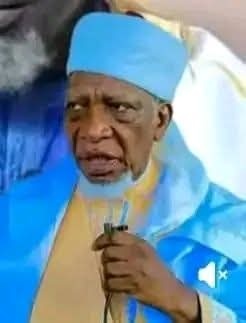
In the aftermath of political crises and historical injustices, there is a popular refrain among certain Fulani elites like Sheikh Sani Yahaya Jingir: “We can never forgive the Igbo for the assassination of Sardauna, Sir Ahmadu Bello, in the 1966 coup.” Yet the same Fulani voices often demand complete historical amnesia and submissive loyalty from the Hausa despite centuries of betrayal, ethnic domination, and mass killings committed against them by Fulani-led jihadists and modern successors.
Let us reflect on history not through emotion alone, but through documented evidence.
Fulani Refusal to Forgive the Igbo vs. Their Historical Crimes Against the Hausa
If the Hausa were as emotionally attached to historical memory as the Fulani claim to be, they too would never forget how their most revered scholars and kings were slaughtered not by outsiders, but by Fulani-led jihadists from 1804 onward.
Reference: Last, M. (1967). The Sokoto Caliphate. Longman.
Reference: Hiskett, M. (1973). The Sword of Truth: Life of Usman Dan Fodio. Oxford.
The Massacre of Hausa Muslim Scholars in Ƴandoto and Beyond
During the political crusade of Shehu Usman Ɗan Fodio, his son Bello waged wars against dozens of Hausa Muslim towns especially in places like Ƴandoto massacring thousands of scholars and elders simply because they refused to accept the Caliphate’s authority. These were not pagans or rebels. They were Muslims murdered for rejecting foreign Fulani domination disguised as religion.
Infaqul maisur page 138-139
Reference: Last, M. (1967). The Sokoto Caliphate, pp. 209–212.
Reference: Yahaya, A.M. (2020). Usman Ɗan Fodio and Ethno-Religious Politics.
The Assassination of Sultan Muhammad Yunfa of Gobir
Usman Ɗan Fodio himself turned against Sultan Yunfa, a Hausa ruler he had once pledged loyalty to. Yunfa’s only “crime” was to resist foreign manipulation of his religious authority. The jihad began with this betrayal murder disguised as “reform.”
Reference: Adeleye, R.A. (1971). Power and Diplomacy in Northern Nigeria, Longman.
Also see: Ajayi & Crowder (eds). (1971). History of West Africa Vol. I.
The Execution of Sultan Muhammad Alwali of Kano
One of the greatest tragedies was the murder of Sultan Muhammad Alwali, the last Hausa king of Kano. He was a well-educated Muslim ruler whose reign ended under Fulani swords. His death was not a religious victory; it was an ethnic conquest.
Reference: Smith, M.G. (1960). Government in Kano 1350–1950. WAI.
Eid Prayer Ambush: Sultan Makau of Zaria
Perhaps the most sacrilegious act was when Sultan Makau of Zaria was ambushed by Fulani forces while leading Eid prayers. Where is the Islamic ethics in attacking a leader during Ṣalāt al-ʿĪd?
Reference: Abdullahi Smith (1971). Early States of the Central Sudan, in Ajayi & Crowder.
Reference: Lovejoy, P. (2016). Jihad in West Africa.
Gawakuke Genocide: 40,000 Hausa Killed in 1850
The Battle of Gawakuke (1850) stands as one of the largest genocides in precolonial Northern Nigerian history. Over 40,000 Hausa civilians and resistors were killed under the command of Sultan Aliyu Babba, son of Bello. This was not a battle it was a massacre.
Reference: Smith, M.G. (1960). Government in Zazzau 1800–1950, Oxford.
Google: “Battle of Gawakuke” to read secondary accounts.
The Betrayal and Murder of Malam Abdussalam Bagimbane
Even those who initially helped the Fulani like Malam Abdussalam of Bagimbane were not spared. After assisting the Fulani to conquer Hausa cities, he was executed when he protested against their anti-Hausa policies and ethnic favoritism.
Reference: Hiskett, M. (1973). The Sword of Truth, p. 344–346.
Modern Atrocities: From Buhari’s Rule to Fulani Banditry (2015–2025)
From 2015 to 2025, over two million Hausa civilians have died due to the unchecked terrorism of Fulani bandits. These killings occurred mostly in Hausa states like Katsina, Zamfara, Sokoto, and Kaduna. The Buhari-led government offered no real justice.
Reference: Amnesty International Reports (2020–2022);
SBM Intelligence: Northwest Security Reports (2015–2023);
International Crisis Group: “Violence in Nigeria’s Northwest”, 2021.
Fulani Clerics Praising Bello Turji, a Terrorist
It is on public record that some Fulani scholars and politicians defended Bello Turji, a notorious terrorist responsible for burning Hausa villages. Where was the condemnation? Instead, what we witnessed was silence or excuses from pulpits and podiums.
Reference: Daily Trust (2022): “Why We Must Dialogue with Bello Turji”
BBC Hausa Interviews (2021–2023)
Premium Times: Reports on Zamfara and Turji’s Operations
August 2024: Murder of Sarkin Gobir Isa — No Condolence
In August 2024, the Sarkin Gobir Isa, was assassinated, yet to this day, no public condolence or jaje has been issued by the Sultan of Sokoto. This deafening silence from the so-called Caliphate shows the double standards in who is mourned—and who is ignored.
Reference: Daily Nigerian (August 2024); Leadership Nigeria; BBC Hausa (August 2024)
Conclusion: Forgiveness Must Be Earned, Not Demanded
If the Hausa people were to memorialize their pain the way the Fulani remember 1966, Nigeria would unravel. Selective memory cannot be the basis of peace. Justice must be universal, not tribal. The Hausa have shown a historic capacity for tolerance but that tolerance is not blindness.
The Fulani must look inward and answer the question: If they cannot forgive the Igbo for 1966, why do they expect the Hausa to forget over two centuries of betrayal, massacre, and cultural suppression?
If the Hausa people possessed the same sense of historical attachment and emotional memory as the Fulani, there would be no grounds for reconciliation.only reckoning.
Let us revisit history again:
Between 1804 and the mid-19th century, thousands of respected Hausa Muslim scholars were massacred by Bello bin Fodio, son of Usman ɗan Fodio, simply because they refused to accept the authority of his father’s caliphate. In the town of Ƴandoto alone, dozens of Hausa Muslim towns were razed to the ground. Their only “crime” was their loyalty to Islam as it was practiced before the Sokoto Jihad not through Fulani supremacy.
The assassination of Sultan Muhammad Yunfa of Gobir by the Jihadists is another historical wound. This was not the fall of a tyrant, as later Fulani narratives try to suggest, but the brutal toppling of a sovereign Hausa Muslim king who resisted foreign domination disguised as religious reform.
Sultan Muhammad Alwali of Kano, a devout Muslim and learned ruler, was also unjustly murdered. Likewise, Sultan Muhammad Makau of Zaria was attacked while in the middle of Eid prayers hardly an act consistent with Islamic ethics.
The 1850 Massacre at Gawakuke, led by Sultan Aliyu Babba (son of Bello), witnessed the slaughter of over 40,000 Hausa people. It was a genocide disguised as a military campaign. Anyone in doubt can verify this atrocity by searching for the Battle of Gawakuke a widely documented historical tragedy.
Let us not forget Malam Abdussalam of Bagimbane, a Hausa ally of the Fulani Jihadists. After being used to gain access to Hausa territories, he was murdered by the Sokoto leadership for simply expressing concern over the ethnic favoritism and suppression of Hausa identity. His death was a betrayal of the worst kind one carried out against a brother-in-struggle.
Now, fast forward to contemporary times:
From 2015 to 2025, under the leadership of Muhammadu Buhari a Fulani president over two million Hausa civilians have been victims of Fulani banditry, terrorism, and state-sponsored neglect. These atrocities have occurred mostly in the Northwest, where the Hausa reside. Yet, no formal national mourning, no reconciliation commission, and no justice have been rendered.
Prominent Fulani clerics and politicians mount pulpits and platforms to defend criminals like Bello Turji, a known terrorist. These same voices are silent or worse, dismissive when Hausa villages are razed and innocent lives destroyed.
In August 2024, the Sarkin Gobir Isa, was assassinated, and to this day, no public condolence has been offered by the Sultan of Sokoto or the Fulani traditional establishment. Would such silence have followed the death of a Fulani ruler?
The pattern is clear: historical amnesia is demanded only from the Hausa, while the Fulani hold on tightly to every offense against their own, real or perceived, even from six decades ago.
It is intellectually dishonest and morally indefensible for any Fulani group or scholar to lecture the Hausa on forgiveness while ignoring their own historical crimes and the ongoing dehumanization of the Hausa nation.
True reconciliation requires truth. And truth demands accountability, not selective memory. Until the Fulani acknowledge the centuries of bloodshed, betrayal, and cultural erasure they inflicted upon the Hausa people there can be no moral high ground.
If the Hausa people ever decide to hold onto their history the same way the Fulani do, the foundation of that so-called unity would crumble under the weight of truth.