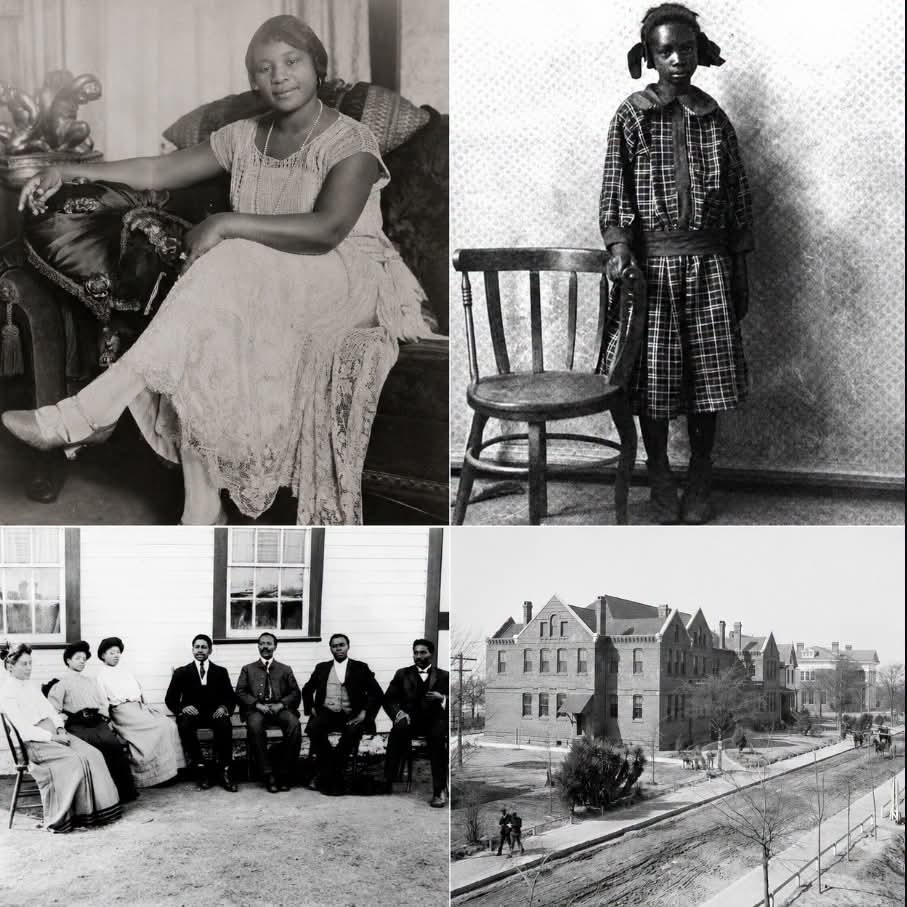
In 1913, an eleven-year-old Black girl became one of America’s richest people, and suddenly adults across the nation wanted control of her fortune.
In 1913, an eleven-year-old Black girl became one of America’s richest people, and suddenly adults across the nation wanted control of her fortune.
Before newspapers called her the “richest colored girl in the world,” before strangers searched for ways to reach her money, and before America turned her childhood into a headline, Sarah Rector was simply a young Black girl growing up near Taft, Oklahoma.
She was a child born into a family that understood something many Americans had never been forced to consider: ownership could mean survival.
The land beneath Sarah’s feet carried a history much older than the oil that would later transform her life. It carried the memory of people who had lived through slavery, fought for freedom, and struggled to hold onto something their ancestors had been denied for generations.
Sarah was part of the Creek Freedmen community, descendants of Black people who had been enslaved by members of the Muscogee Creek Nation. After the Civil War, treaties and government decisions recognized the rights of Creek Freedmen, including access to land allotments.
For families like the Rectors, that land represented more than property.
It represented a chance.
After generations of being treated as possessions, Black families were finally trying to create something they could own, protect, and pass down. Land meant a home. Land meant independence. Land meant that their children might inherit something different from what their parents had known.
But freedom did not erase the obstacles waiting for them.
The United States had ended slavery, but it had not ended inequality. Across the country, Black Americans faced segregation, discrimination, violence, and economic barriers designed to limit their opportunities.
Oklahoma was no exception.
During this era, Black communities across the state were building towns, businesses, churches, and schools of their own. Places like Taft became examples of Black determination, created by people who refused to wait for a society that had repeatedly told them they did not belong.
The Rector family was part of that movement.
Sarah’s father, Joseph Rector, received land connected to Creek Freedmen allotments near Taft. At first, the property did not appear to be a treasure. It was not the kind of land people rushed to buy. Farming was difficult, and the costs of maintaining the property created pressure.
To outsiders, it looked like an ordinary piece of land.
To the Rector family, it was something precious.
It was theirs.
That distinction mattered.
For Black families in America, owning land was never just an economic decision. It was a statement that despite everything taken from their ancestors, they could still build something of their own.
But ownership came with responsibilities.
The taxes connected to Sarah’s allotment created financial challenges, and the family needed a way to make the property support itself. They eventually leased the land to oil developers, hoping the decision would provide enough income to protect what they had.
They could not have known that beneath the ground was a discovery that would change history.
In 1913, drilling on Sarah’s property struck oil.
The land that many people had ignored suddenly became extremely valuable. The discovery connected Sarah’s property to Oklahoma’s booming oil industry, and the royalties began transforming her family’s financial future.
Almost overnight, Sarah Rector became famous.
But there was something extraordinary about the person at the center of this story.
She was only eleven years old.
At an age when most children were thinking about school, friends, and the simple experiences of growing up, Sarah’s name was appearing in newspapers across the country.
People who had never met her knew about her money.
They knew about her fortune.
They had opinions about her future.
But they did not know her.
Newspapers often focused on the size of Sarah’s wealth rather than the young girl behind it. They described her using sensational language that reflected the racial attitudes of the time, fascinated that a Black child could possess a fortune that challenged the expectations placed on African Americans.
America had seen wealthy people before.
But a wealthy Black child was something many Americans did not know how to accept.
Sarah’s success forced the country to confront an uncomfortable reality: Black prosperity existed even in an era built around limiting Black advancement.
Her wealth also attracted unwanted attention.
Letters and requests came from people seeking help or hoping to benefit from her fortune. Adults suddenly surrounded a child whose life had changed before she was old enough to understand the attention coming toward her.
Because Sarah was a minor, adults were legally responsible for managing her estate.
This was where the story became more complicated.
For many Black families, the idea of someone else controlling their wealth was deeply concerning. They had seen too many examples of Black land and resources being taken through unfair contracts, manipulation, and legal systems that often failed to protect them.
Sarah’s situation became a symbol of a larger question:
Could Black wealth survive in America when so many systems had historically worked against Black ownership?
Black newspapers paid close attention.
The Chicago Defender investigated concerns about Sarah’s financial situation, and Black leaders watched carefully because they understood the meaning behind her story. This was not only about one young girl’s money.
It was about whether Black families could create wealth and keep it.
It was about whether a Black child could inherit success without that success being challenged.
Later records showed a more complicated reality. Sarah’s guardian, T.J. Porter, managed her estate in ways that preserved and expanded much of her wealth, with legal oversight involved. The fears surrounding her situation reflected the broader experiences of Black communities, even though Sarah’s own financial outcome was more secure than some had feared.
Sarah was given educational opportunities that were rare for many Black children of her generation.
She spent time at the Children’s House connected with Tuskegee Institute, an institution associated with the belief that education could strengthen Black communities and create pathways toward advancement.
But as Sarah grew older, she began leaving behind the identity newspapers had created for her.
She was no longer just the little girl whose land produced oil.
She became a woman determined to shape her own future.
As an adult, Sarah moved to Kansas City, Missouri, where she entered a thriving Black community filled with entrepreneurs, professionals, and cultural leaders. She purchased a large home on East 12th Street and became part of a world where Black success was being built every day despite segregation.
She invested in real estate, stocks, and business opportunities.
The same person America had once viewed as a lucky child had become a woman making decisions for herself.
Her story was no longer about an oil well.
It was about independence.
Her home became part of the social landscape of Black Kansas City during a period when African American culture, business, and creativity were flourishing. Sarah lived among people who were creating their own institutions because they understood that waiting for acceptance was not an option.
But even wealth could not completely shield anyone from America’s economic struggles.
The Great Depression damaged fortunes across the country, including Sarah’s. The money that had once made her a national symbol declined over time, and she eventually sold the mansion that represented one chapter of her success.
To some people, losing wealth might have meant losing importance.
But Sarah Rector’s life was never truly about money.
The oil made people notice her.
The headlines made people remember her.
But her resilience made her remarkable.
She had carried the expectations of an entire nation since childhood. She had lived through a time when Black achievement was often questioned, underestimated, or treated as an exception rather than a reality.
Yet she continued forward.
Sarah Rector died in 1967 at the age of sixty-five and was buried near Taft, Oklahoma, returning to the community connected to the beginning of her journey.
The world first remembered Sarah because of what was underneath her land.
But history remembers her because of what was inside her.
She was not simply the Black girl who became wealthy from oil.
She was the daughter of a family that believed ownership mattered. She was part of a generation that transformed survival into ambition. She was proof that Black dreams existed even when the world tried to place limits on them.
The fortune beneath Sarah Rector’s land eventually faded.
The newspapers stopped printing her name.
The country moved on to other stories.
But the meaning of her life remained.
Because Sarah Rector’s greatest inheritance was never the oil that made her rich.
It was the courage of the people who came before her, the determination to protect what they built, and the undeniable truth that Black prosperity was never an accident.
It was always a fight.
And Sarah Rector was one of the people who proved that the fight could be won.
I invest a lot of time researching and sharing these important stories. If you’d like to support the work behind them, here’s the link: