Lost Biafran Children Who Never Came Home 🕯️
Lost Biafran Children Who Never Came Home 🕯️
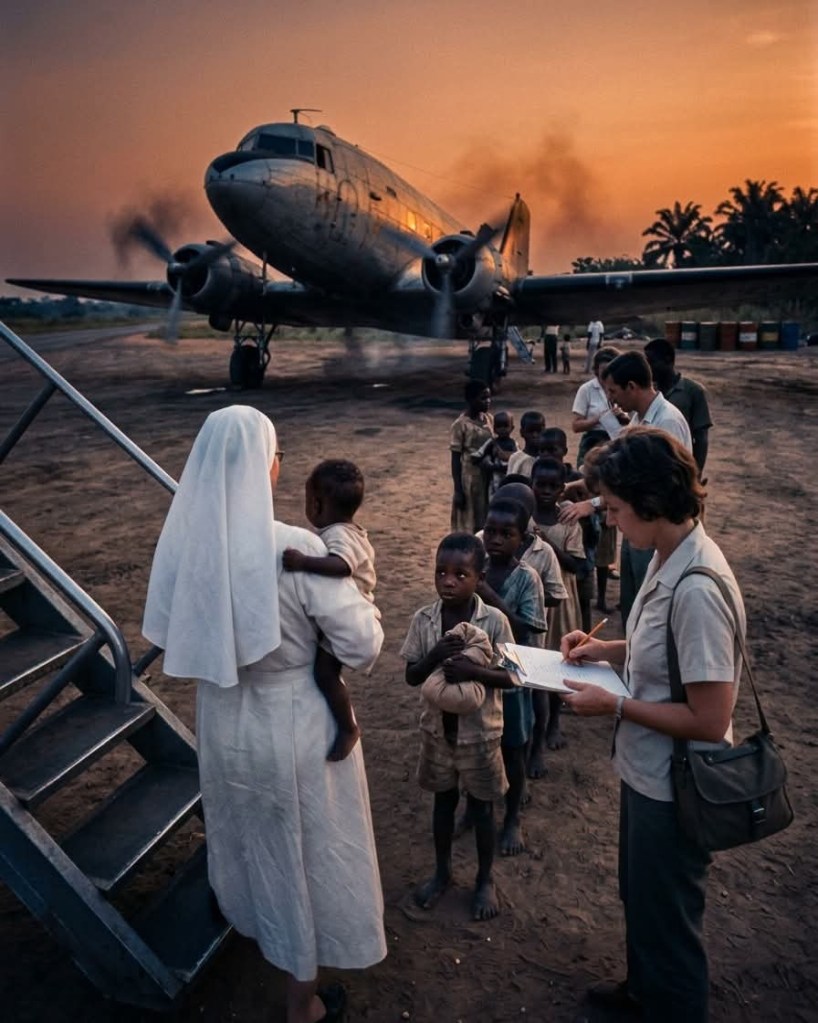
In August 1968, as the famine tightened its grip on Biafra, the first planeloads of starving children lifted off from the enclave’s improvised airstrips. Over the following months more than five thousand of them were flown out to Gabon, Côte d’Ivoire and the island of São Tomé, handed into the care of Caritas, the Red Cross, the Order of Malta and a French charity called Terre des Hommes. The idea was simple and desperate: get the children somewhere they could be fed, then bring them home when the shooting stopped.
Most did come home. After Biafra’s collapse in January 1970, the UN refugee agency helped repatriate over five thousand children from Gabon and Côte d’Ivoire. But “most” is not “all”, and the gap is where the heartbreak lives. Some children had arrived too sick to survive. Some had been logged under mission names, nicknames, or nothing at all. Some were toddlers when they left, with no memory of a village, a surname or a face to return to.
The paperwork was never built for this. Children were moved in a hurry, under fire, by half a dozen different organizations that did not always share their lists. A child flown out by the French Red Cross might end up in a Gabonese orphanage whose records never reached the family back in Nigeria. When the war ended, matching thousands of small, frightened, often unnamed children to relatives who might themselves be dead or displaced was close to impossible.
So a number of them simply never came home. They grew up in Libreville or Abidjan, absorbed into new families and new languages, their origins reduced to a line in a ledger or nothing at all. Decades later, some would begin to suspect the truth and start searching.
Nobody agreed on how many were lost, because nobody had counted them properly in the first place. That is the quiet horror of it. In a war that killed perhaps a million people, a group of the youngest survivors slipped through the cracks of the very effort meant to save them and were never fully accounted for again.