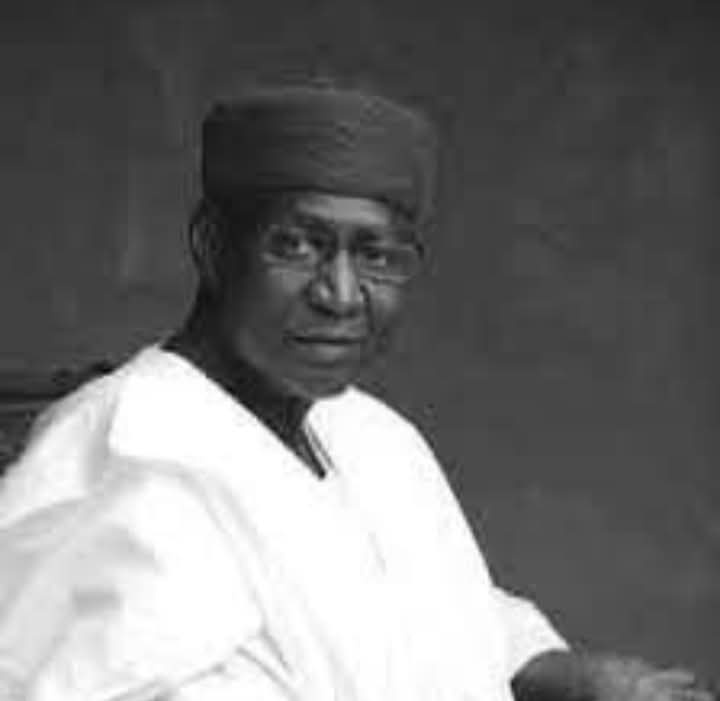
Abba Kyari CFR, OON was one of the most influential public officials in Nigeria’s recent political history.
Abba Kyari CFR, OON was one of the most influential public officials in Nigeria’s recent political history. A lawyer, administrator, banker, and public servant, he served as Chief of Staff to President Muhammadu Buhari from August 2015 until his death on 17 April 2020. Throughout his tenure, he occupied a central position within the Presidency and played a significant role in coordinating government activities and implementing presidential policies.
Born on 23 September 1952 into a Shuwa Arab family from Borno State, Kyari received his early education at St. Paul’s College, Wusasa, in Zaria. During his youth, he considered joining the Nigerian Army after receiving encouragement from Mamman Daura and Ibrahim Tahir. In 1976, while General Muhammadu Buhari was serving as the Military Governor of Borno State, Kyari met him for the first time. That meeting marked the beginning of a relationship that would later become important in Nigeria’s political history.
Kyari pursued higher education in the United Kingdom, where he earned a Bachelor of Arts degree in Sociology from the University of Warwick in 1980. He later studied law at the University of Cambridge before returning to Nigeria to attend the Nigerian Law School. In 1983, he was called to the Nigerian Bar. The following year, he obtained a Master of Laws degree from the University of Cambridge, further strengthening his legal qualifications.
Committed to continuous professional development, Kyari also attended executive management programmes at the International Institute for Management Development in Lausanne, Switzerland. He later participated in Harvard Business School’s prestigious Program for Leadership Development in both 1992 and 1994, preparing him for senior leadership roles in both the private and public sectors.
After completing his legal education, Kyari began his professional career with the law firm of Fani Kayode and Sowemimo. His legal background soon opened opportunities in journalism and business management. Between 1988 and 1990, he served as an editor with New Africa Holdings Limited in Kaduna, gaining valuable experience in media and corporate administration.
During the 1990s, Kyari entered public service when he was appointed Commissioner for Forestry and Animal Resources in Borno State. His administrative abilities later earned him appointment as Secretary to the Board of African International Bank Limited, a subsidiary of the Bank of Credit and Commerce International, where he served from 1990 to 1995.
Kyari subsequently built a distinguished career in Nigeria’s banking industry. At the United Bank for Africa, he rose through the ranks to become Executive Director in charge of Management Services and later served as the bank’s Chief Executive Officer. His reputation as an experienced corporate executive led to his appointment to the Board of Directors of Unilever Nigeria in 2002. He also served on the board of ExxonMobil Nigeria, further establishing himself as one of Nigeria’s respected business leaders.
A defining moment in Kyari’s career came in August 2015 when President Muhammadu Buhari appointed him Chief of Staff shortly after assuming office. In this role, Kyari became the President’s principal adviser and chief coordinator of activities within the Presidency. His office oversaw communication between the President and government ministries, departments, agencies, and other key institutions.
Although he rarely sought public attention, Kyari quickly emerged as one of the most influential figures in the Buhari administration. His ability to control access to the President and coordinate major government decisions made him a powerful figure within the Presidency. Supporters viewed him as an efficient administrator who ensured discipline and order in government, while critics argued that too much authority had become concentrated in his office.
Following President Buhari’s re election in 2019, the administration introduced a directive requiring ministers to channel many official requests through the Office of the Chief of Staff before they reached the President. This arrangement further strengthened Kyari’s influence in government and contributed to public perception that he had become one of the most powerful unelected officials in Nigeria’s democratic history.
His years in office were not without controversy. In 2017, a leaked internal memo brought him into a public disagreement with the Head of the Civil Service of the Federation. The dispute generated widespread public debate and was followed by the removal and subsequent arrest of the civil servant on corruption related allegations. In early 2020, another leaked memo from the National Security Adviser, Major General Babagana Monguno (Rtd), accused Kyari of interfering in matters relating to national security. These disagreements reflected broader tensions within the administration regarding the coordination of government responsibilities.
Beyond public office, Kyari was a devoted family man. He was married to the sister in law of Ibrahim Tahir, and together they had four children named Aisha, Nurudeen, Ibrahim, and Zainab.
In March 2020, as the COVID 19 pandemic spread across the world, Kyari returned to Nigeria after an official visit to Germany. On 24 March, it was publicly announced that he had tested positive for the coronavirus. Initially, he remained in isolation in Abuja, but on 29 March he disclosed that he had been transferred to Lagos for further medical treatment. Reports also indicated that he had underlying health conditions, including diabetes, which increased the risks associated with the illness.
Despite receiving treatment, Abba Kyari died on the evening of 17 April 2020 at the age of 67. His death marked one of the earliest high profile losses to COVID 19 in Nigeria and drew tributes from political leaders, diplomats, business executives, and ordinary citizens across the country. President Muhammadu Buhari described him as a trusted friend and dedicated public servant whose commitment to national service remained unwavering until the end of his life.