TWO GIANT DIAMOND DISCOVERIES IN TWO WEEKS — WHAT IT MEANS FOR BOTSWANA
TWO GIANT DIAMOND DISCOVERIES IN TWO WEEKS — WHAT IT MEANS FOR BOTSWANA
Lightning has struck twice in Botswana — and the world has taken notice.
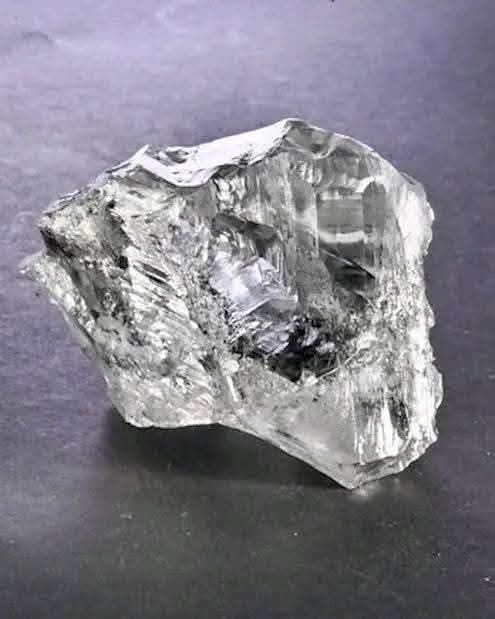
Within the span of just a few weeks, the Karowe Mine has yielded not one, but two extraordinary gem-quality diamonds of historic magnitude. The first, an astonishing 2,492-carat rough diamond, followed shortly by another remarkable discovery — a 1,094-carat gem-quality stone. In the entire recorded history of diamond recovery, stretching back nearly 4,000 years, fewer than ten diamonds exceeding 1,000 carats have ever been found. To uncover two such stones in such a short time is not merely rare — it is unprecedented.
These discoveries reaffirm Botswana’s standing as a global leader in natural diamonds, not only in production value but in the sheer scale and quality of stones emerging from its soil.
THE SOURCE: KAROWE MINE AND ITS GLOBAL SIGNIFICANCE
Operated by Lucara Diamond Corp, the Karowe Mine has established itself as one of the most prolific sources of large, high-value diamonds in the world. Of the ten largest diamonds ever discovered, seven have originated from Karowe, a statistic that speaks to both the exceptional geology of the region and the technological expertise employed in extraction.
The newly recovered 1,094-carat diamond represents the sixth stone over 1,000 carats discovered by Lucara, further cementing its position as a dominant force in the recovery of ultra-rare diamonds.
UNDERSTANDING THE SCALE OF THESE GIANTS
To grasp the magnitude of these discoveries, one must understand the scale of carat weight. A single carat weighs just 0.2 grams, roughly the size of a small pea. By contrast, a 2,000-carat diamond weighs approximately 400 grams — nearly a full pound.
In physical form, a diamond of this size could rival the dimensions of a tennis ball or larger, possessing a presence that transcends conventional perceptions of gemstones. These are not ornaments; they are geological phenomena.
From a valuation perspective, stones of this magnitude are difficult to price prior to cutting. However, a gem-quality diamond exceeding 2,000 carats has the potential to yield multiple exceptional stones, collectively worth hundreds of millions of dollars, depending on clarity, color, and the precision of cutting.
The two diamonds discovered in Botswana — the 2,492-carat stone and the 1,094-carat stone — rank among the rarest ever recovered. The larger of the two approaches the scale of legendary diamonds such as the Cullinan Diamond, while the smaller still far exceeds the size of most stones encountered even in the highest tiers of luxury jewelry
THE NAMING OF MOTSWEDI AND SERITI
In a move that intertwined national identity with geological achievement, Lucara initiated the Legacy National Diamond Naming Competition, inviting citizens of Botswana to name these historic stones.
Over the course of just two weeks, approximately 39,000 name submissions were received — a remarkable demonstration of public engagement and national pride. These entries were evaluated by a distinguished panel, including Thapelo Joseph Otlogetswe, a respected linguist and lexicographer from the University of Botswana.
The winning names were unveiled at a prestigious gala in Gaborone, attended by Bogolo Kenewendo, Minister of Minerals & Energy.
The 2,492-carat diamond, recovered in August 2024, was named Motswedi — meaning “a water spring” in Setswana. The name symbolizes life, renewal, and the powerful emergence of underground forces rising to the surface.
The 1,094-carat diamond, recovered in September 2024, was named Seriti — meaning “aura” or “presence”. This name reflects a deeper philosophical and cultural dimension, representing identity, dignity, and the unseen force that defines legacy.
These names do more than identify stones — they root them in the language, culture, and spirit of Botswana.
WHY THESE DISCOVERIES MATTER BEYOND SIZE
The significance of these diamonds extends far beyond their physical scale.
Botswana stands as the world’s leading producer of diamonds by value, and its economy is deeply intertwined with the natural diamond industry. Diamond revenue forms the backbone of the nation’s GDP, enabling Botswana to achieve one of the highest GDP per capita levels in Africa.
Through this industry, the nation has been able to:
Provide free education
Deliver accessible healthcare
Invest in infrastructure development
Support small businesses and economic growth
These diamonds are not isolated treasures — they are instruments of national development.
They represent the transformation of natural resources into tangible improvements in the lives of millions of Batswana.
THE FUTURE OF KAROWE AND BOTSWANA’S DIAMOND LEGACY
Looking forward, Lucara’s underground expansion project at Karowe is set to extend the life of the mine beyond 2040, ensuring continued contribution to Botswana’s economy for decades to come.
Technological advancements, particularly in X-ray transmission (XRT) sorting, have revolutionized diamond recovery. This innovation allows large diamonds to be extracted intact, rather than breaking during the process — a critical factor in preserving stones of this magnitude.
Such developments are not merely technical; they are transformative, redefining what is possible in modern diamond mining
THE RARITY OF SUCH DISCOVERIES
The rarity of these diamonds cannot be overstated.
Fewer than 30 diamonds over 500 carats have ever been discovered.
Diamonds exceeding 1,000 carats are exponentially rarer.
To find two within weeks is an event that reshapes the historical record of diamond discovery.
These are not simply large gemstones.
They are once-in-a-generation phenomena — natural masterpieces that capture global attention and redefine the limits of what the earth can produce.
A NATIONAL SYMBOL OF POWER AND POSSIBILITY
For Botswana, the discovery of Motswedi and Seriti is more than a geological triumph. It is a reaffirmation of national identity, capability, and future potential.
These diamonds stand as symbols of:
Resource stewardship
Economic transformation
Cultural pride
Global relevance
They remind the world that Botswana is not merely a participant in the diamond industry — it is a leader shaping its future.
And for Batswana, they are a powerful testament to what lies beneath their soil — and within their sovereignty.