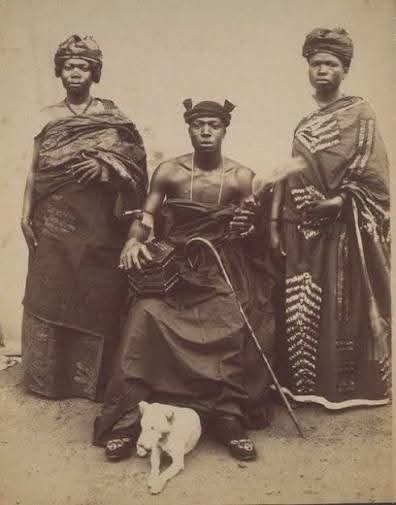
The First Known Settlers of Our Motherland – The Story of the Guan People
🇬🇭 The First Known Settlers of Our Motherland – The Story of the Guan People 💯
When we talk about the history of Ghana, names like the Akan, Ewe, Ga, Dagomba, and Gonja often come to mind.
However, long before many of these well-known ethnic groups settled in the land we now call Ghana, another people had already established communities across the country.
These were the Guan people, who are widely recognized by historians as the earliest known settlers of present-day Ghana.
Around A.D. 1000, the Guans began migrating from the Mossi region of present-day Burkina Faso. Travelling south through the Volta River Basin, they gradually spread across different parts of Ghana, settling in the Black Volta area, the Afram Plains, the Akwapim Hills, the Volta Gorge, and many other regions.
By the time later ethnic groups arrived, the Guans had already built thriving communities across much of the country.
Unlike the powerful kingdoms that emerged later, the early Guan settlements were not ruled by large armies or mighty kings.
Instead, they lived in smaller, independent communities where priests, spiritual leaders, elders, and traditional rulers guided society. Their way of life was centred on farming, hunting, fishing, and preserving their customs and beliefs.
As the centuries passed, new waves of migration brought the Akan, Ga-Adangme, Ewe, and other ethnic groups into Ghana.
Some Guan communities mixed with these new settlers, adopting new languages and customs while still preserving parts of their own culture. Others remained distinct and proudly maintained their languages, traditions, and identity.
Today, the Guan people are still found across many parts of Ghana. Their descendants include communities such as the Efutu, Awutu, Senya, Larteh, Kyerepong (Okere), Anum, Boso, Nkonya, Buem, Likpe, Logba, Tafi, Avatime, Krachi, Nawuri, Nchumuru, some part of Assin, Akyode, and the Gonja, who later established one of the most powerful kingdoms in northern Ghana during the 17th century.
The Guan people are generally grouped into four major geographical clusters. The Northern Cluster includes the Gonja, Nawuri, Nchumuru, Krachi, Akyode, Dwan, and Yeji communities. The Southern or Coastal Cluster includes the Efutu, Awutu, Senya, and Etsi people. The Eastern Cluster is made up of communities such as Larteh, Kyerepong, Anum, and Boso, while the Volta and Oti Mountain Cluster includes groups like the Nkonya, Buem, Likpe, Akpafu, Lolobi, Logba, Tafi, and Avatime.
Although they are sometimes overlooked in popular discussions of Ghana’s history, the Guans played a foundational role in the settlement of our country.
Their story reminds us that Ghana’s history did not begin with colonial rule or even with the rise of the famous kingdoms.
It began centuries earlier with brave people who journeyed across rivers, forests, and mountains to establish communities that became the foundation of our nation.
Today, the Guan people remain an important part of Ghana’s rich cultural heritage. Their history is a reminder that every ethnic group has contributed to building the Ghana we proudly call our motherland.
Before the Ashanti Empire… Before the Ga, Ewe and many other groups settled… The Guan people had already begun writing the first chapters of Ghana’s story.