
ỌMU: THE FEMALE KING OF IGBOLAND
ỌMU: THE FEMALE KING OF IGBOLAND
The Sacred Throne That Balanced Power Between Men and Women in igboland
Who is Ọmu?
In Igbo tradition, especially in Anioma, Asaba, Onitsha, Aboh, and other western Igbo kingdoms, Ọmu means “the female king.” She is not a queen consort. She is not the wife of the king. The Ọmu is a monarch in her own right, with her own palace, cabinet, title holders, and jurisdiction. While the Obi governs the men and external affairs, the Ọmu governs the women, the market, and the moral life of the community. Two thrones. One kingdom. Perfect balance.
The Ọmu’s duties are constitutional and spiritual.
- Legislator for Women: She makes laws concerning marriage, childbirth, and the conduct of women.
- Chief Judge: All cases involving women, the market, and domestic affairs go to her court first.
- Custodian of the Market: She controls market days, weights, measures, and sanctions traders. No market can open without her blessing.
- Chief Priestess: She leads rituals for fertility, peace, and the purification of the land.
- Check on the Obi: If the Obi becomes tyrannical, the Ọmu can rally the women and shut down the market. In Igboland, when women withdraw, the kingdom stops.
Her authority is not delegated. It is divine.
Igbo spirituality is built on duality and balance. Chukwu is the supreme God, but Ala — the Earth Goddess — is female and the most feared deity. She owns the land, controls morality, and punishes abominations. Because Ala is female, the earth is governed by feminine principles: nurturing, justice, and balance. This is why Igbo society created parallel institutions for women. From Ụmụada to Otu Ndi Nwanyi to Ọmu, women were never an afterthought. To violate a woman or disrespect the Ọmu was to invite the curse of Ala. That is why peace was maintained.
Many African societies had queen mothers or female chiefs. But the Igbo system of the Ọmu is unique because it is institutional, hereditary or elective, and co-equal to the male kingship. It is not symbolic. The Ọmu collects taxes, tries cases, and commands her own title society. While other cultures centralized power in one male king, Igboland decentralized it and gendered it. Men handled war and external diplomacy. Women handled the market, morality, and internal order. This created a system of checks and balances that prevented dictatorship for centuries.
This dual system made Igbo communities stable and prosperous. Because women had direct access to power, their interests were protected in law. Domestic violence was rare and punished. Markets flourished because the Ọmu ensured fairness. Children were raised with the knowledge that both male and female authority must be respected. When the British came and imposed “Warrant Chiefs,” they ignored the Ọmu. That was the first mistake. They removed half of the government and wondered why there was chaos.
Modern Africa talks about “gender inclusion” as if it is new. But our ancestors already practiced it. The Ọmu system shows that development happens fastest when both men and women govern. When women are in the room where decisions are made, corruption drops, families are protected, and communities thrive.
The Ọmu is proof that Africa did not need to import feminism. We had our own model.
The Ọmu throne is more than history. It is a blueprint.
It tells us that a society that respects women is a society that will endure.
To bring back peace, justice, and balance in our communities today, we must return to the wisdom of our ancestors: _let both the Obi and the Ọmu reign.
To all our mothers, our Ọmus, and our daughters: Igbo land honors you.
Did your community have female King like that of Ọmu tell us in the comments section
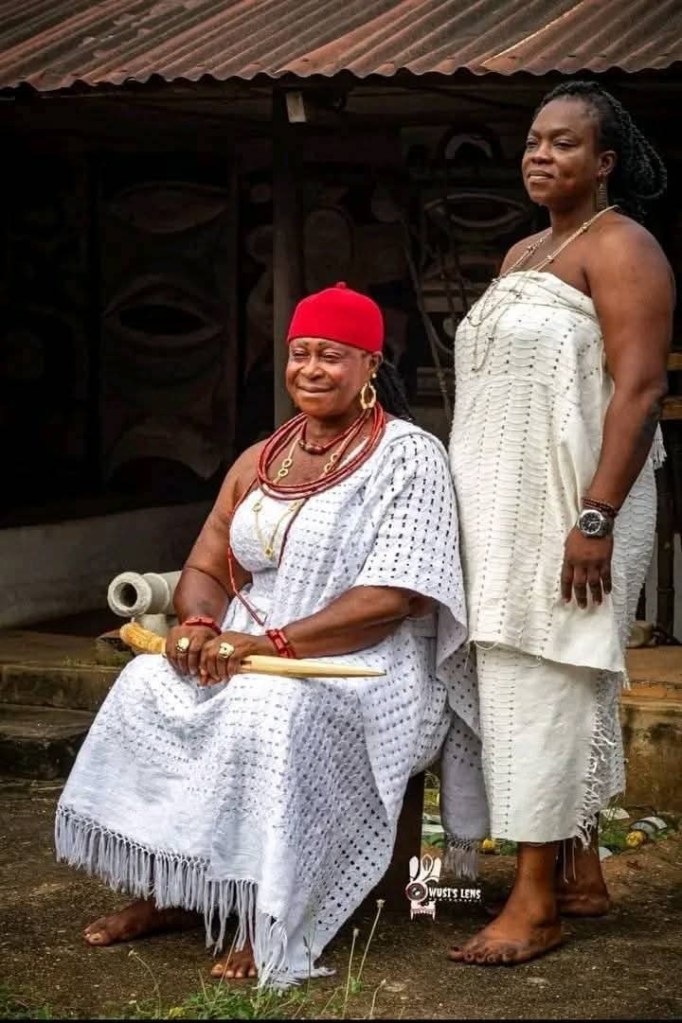
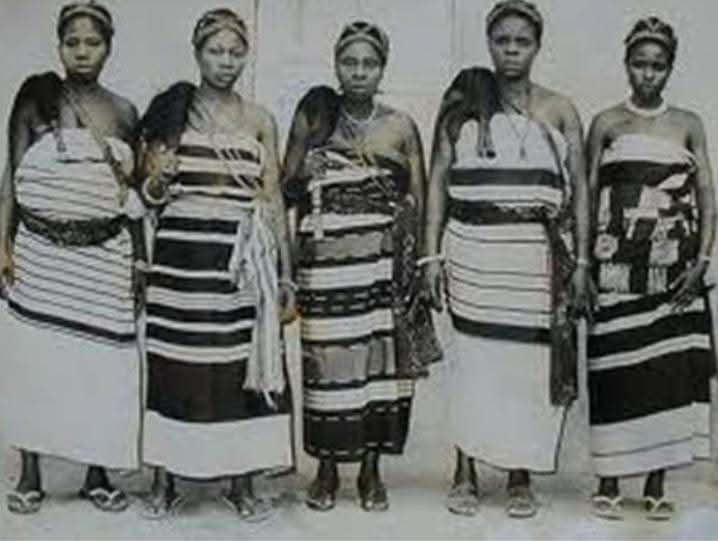
The first picture is ancient Ọmu why the second picture is the present Ọmu in anioma the third and last picture is ancient title women called “inyom”
Igbo Amaka.


Very nice.
LikeLiked by 2 people