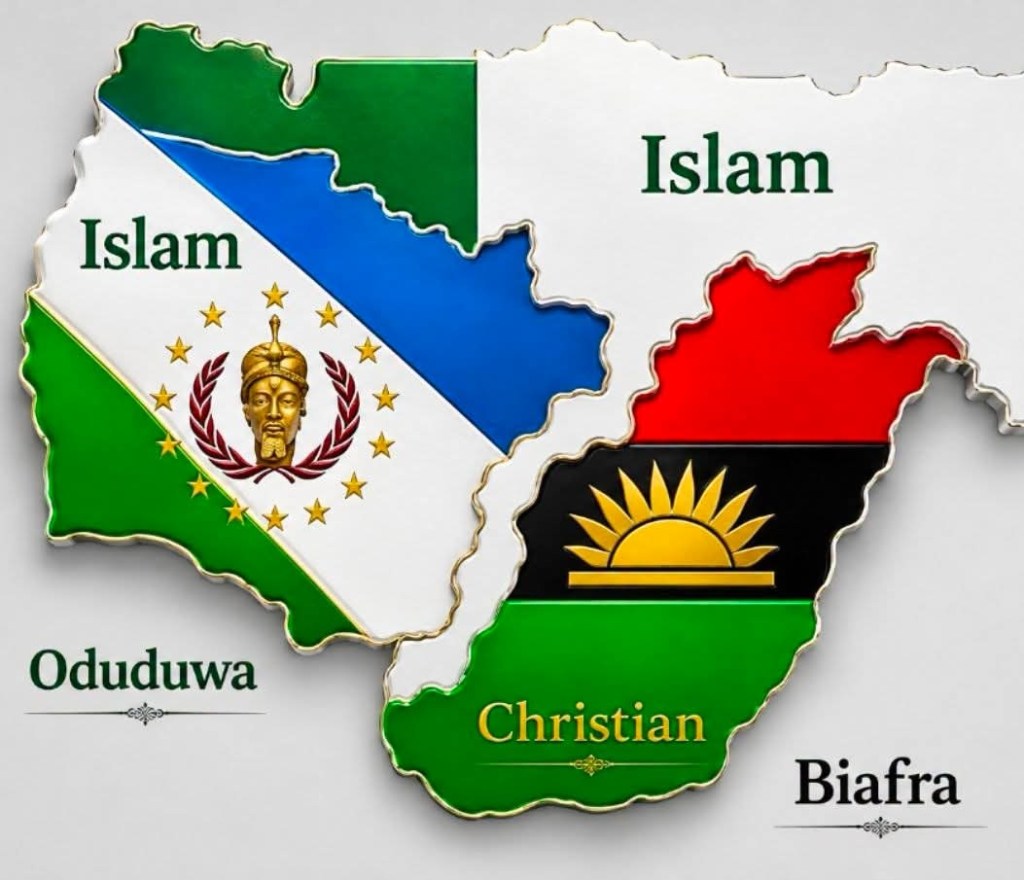
Why Biafra Restoration Is West Africa’s Solution, Not Its Threat
Why Biafra Restoration Is West Africa’s Solution, Not Its Threat
For years, the narrative peddled to Washington, London, and international power centers has been the same tired script. Biafra restoration will destabilize West Africa. Biafra will trigger regional chaos. This narrative is not just false, it has the logic completely backwards. Biafra restoration will not create the insecurity the world fears. It will end an insecurity that has already been kiilling people for years while the world looked away.
Consider what has actually been destabilizing the region. It is not a peaceful referendum movement asking for self-determination. It is armed Fulani herdsmen terrorists invading farming communities across the East and Middle Belt, burning villages, killing families, and displacing thousands, year after year, with almost no accountability. That is the actual security crisis in this region. Biafra restoration directly addresses it. A sovereign Biafra means Igbo communities gain the autonomy and security infrastructure to defend their own land, rather than depending on a federal government that has shown little urgency in stopping these invasions.
Now extend that same logic northward, to the Middle Belt. States like Benue, Plateau, Southern Kaduna, and Nasarawa are majority Christian, yet they have spent years absorbing the same kind of att@cks Igbo communities face, herders invading farmland, communities burying their dead weekly, families displaced from ancestral land while the international community debates whether to call it a crisis. A restructured Nigeria that grants Middle Belt states genuine autonomy from the core North would let these largely Christian populations govern their own security, protect their own land, and finally stop the weekly funerals that have become routine in that part of the country.
Here is the part the world is not being told. This restructuring benefits everyone involved, not just the South East and Middle Belt. A core North governed on its own terms would be free to practice its own religion and culture without the tension of ruling over regions that do not share its demographic or religious makeup. Fewer forced unions mean fewer flashpoints. Communities that are demographically and culturally distinct governing themselves separately is not chaos, it is the removal of the very friction that has fueled decades of instability in the first place.
This is the part Western observers consistently miss when they hear the word “Biafra” and assume conflict. They are looking at a movement asking for separation and assuming separation always means w@r. But the deeper truth is that forced unity, not separation, has been the actual source of West Africa’s instability. Nigeria as currently constructed forces together populations with different religious practices, different security needs, and different visions of governance, then acts surprised when the tension produces vi0lence.
Biafra is not a threat to West African stability. Biafra is a proposed correction to the actual source of that instability, a colonial map that was never designed around the people forced to live inside it. Let the Igbo govern the Igbo. Let the Middle Belt govern itself free from domination by the core North. Let the core North govern according to its own cultural and religious identity without the resentment of ruling regions that never wanted to be ruled by them.
Peace does not come from forcing incompatible unions to stay together indefinitely. Peace comes from letting people govern themselves in a way that reflects who they actually are. That is what Biafra restoration offers, not to Igbo people alone, but to every region trapped in a structure built for colonial convenience rather than the will of the people who live in it.