THE AGOJIE: THE WOMEN WARRIORS WHO FOUGHT FOR DAHOMEY
THE AGOJIE: THE WOMEN WARRIORS WHO FOUGHT FOR DAHOMEY
West Africa, 19th century.
The drums of war echoed across the Kingdom of Dahomey.
As the once-powerful Oyo Empire declined, Dahomey expanded its influence across parts of present-day Benin and into territories inhabited by neighbouring Yoruba-speaking peoples.
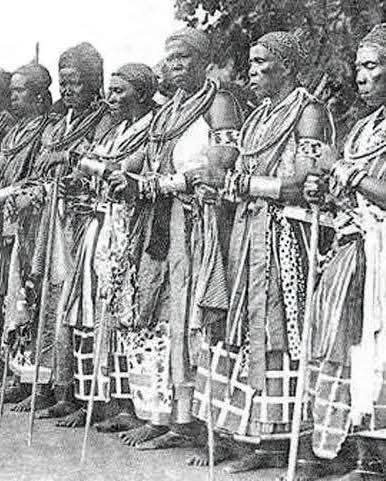
And among Dahomey’s most remarkable soldiers were the Agojie the famous all-female military corps that served the king.
They were not simply palace guards.
They were trained soldiers who participated in Dahomey’s military campaigns and became an important part of the kingdom’s armed forces.
Their reputation eventually travelled far beyond Dahomey’s borders.
And then came Abeokuta.
In 1851, Dahomey’s army launched an attack against Abeokuta, the fortified settlement of the Egba in present-day Ogun State.
The Agojie participated in the campaign.
But Abeokuta was heavily defended.
The Egba had constructed strong fortifications and were prepared for the attack.
Dahomey’s forces were unable to capture the city.
The defeat did not end the conflict.
In 1864, Dahomey launched another major attack against Abeokuta.
Again, the Egba resisted.
The city survived.
These battles are important because they challenge the popular image of the Agojie as an unstoppable force.
They were highly trained and disciplined soldiers, but they were not invincible.
They fought in an era of muskets, swords, spears, fortifications and large armies.
Their military reputation was real, but so was the determination of the people who fought against Dahomey’s expansion.
The Agojie also participated in other military campaigns as Dahomey fought neighbouring states and communities.
They served the Dahomey monarchy and became one of the kingdom’s most distinctive military institutions.
But there is another part of this history that cannot be ignored.
Dahomey’s expansion was closely connected to the Atlantic slave trade.
Captives taken during warfare were sold to European traders, while firearms obtained through trade strengthened Dahomey’s military power.
This means the history of the Agojie cannot simply be presented as a story of fearless women fighting for a noble cause.
They were part of a powerful kingdom involved in warfare, conquest, political expansion and the slave trade.
That complexity is important.
Because African history is not a fairy tale.
It contains heroes, victims, conquerors, resistance fighters and people whose roles changed depending on where they stood.
The Agojie were women who became soldiers in a world where military power was largely dominated by men.
They fought.
They won battles.
They suffered devastating defeats.
And eventually, they faced a new enemy:
France.
During the Franco-Dahomean Wars of the 1890s, the Agojie fought alongside Dahomey’s forces against French colonial expansion.
They suffered enormous casualties while fighting an enemy with increasingly superior military technology.
Dahomey eventually lost its independence.
But the memory of its women warriors survived.
Today, the Agojie remain one of the most famous examples of an organized female military force in African history.
Their story is not simply about bravery.
It is about power, warfare, empire, resistance, conquest and survival.
And perhaps the most important lesson is this:
African history becomes more powerful when we tell the whole story not only the parts that make us comfortable.
Have you heard the full history of the Agojie before?
 Hi welcome to my website