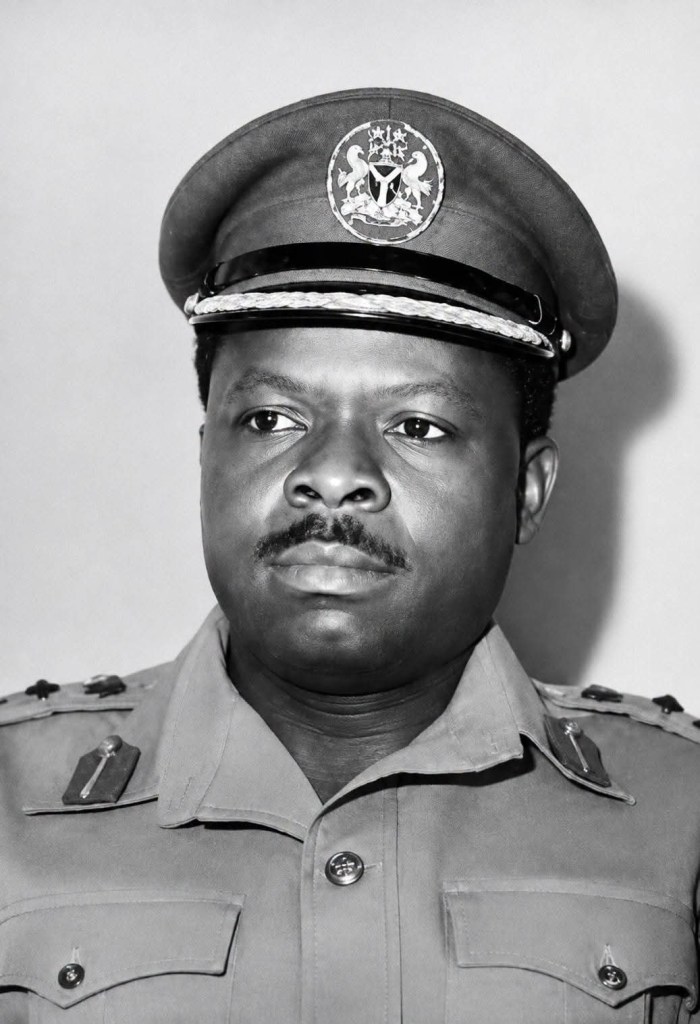
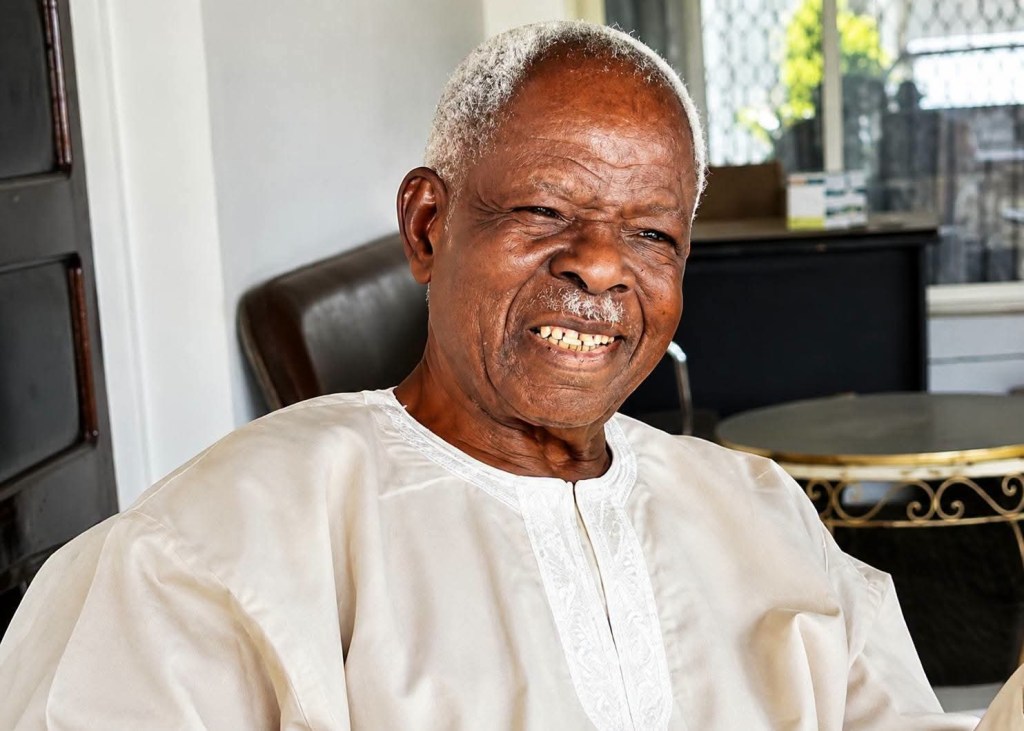
TODAY, WE HONOR THE MEMORY OF THE FIRST INDIGENOUS CHIEF OF STAFF OF THE NIGERIAN ARMY.
TODAY, WE HONOR THE MEMORY OF THE FIRST INDIGENOUS CHIEF OF STAFF OF THE NIGERIAN ARMY.
Major General Robert Adeyinka Adebayo was one of the pioneering Nigerian Army officers of the country’s early post-independence period.
He became the first indigenous Chief of Staff of the Nigerian Army, served as Military Governor of the old Western State from 1966 to 1971, and later played an important role in national reconciliation after the Nigerian Civil War.
He was born 9 March 1928
In Iyin-Ekiti, present-day Ekiti State.
He was educated at All Saints School, Iyin-Ekiti, Eko Boys High School, Lagos, and Christ’s School, Ado-Ekiti.
He joined the then West African Frontier Force in 1948.
Adebayo undertook professional military training in Britain, including studies at Eaton Hall and Staff College, Camberley, and later attended the Imperial Defence College in London.
Adebayo was a remarkable pioneer in the Nigerian Army. Among his notable distinctions were:
First Nigerian General Staff Officer at UN Headquarters in 1961.
First Nigerian General Staff Officer Grade 2 at Nigerian Army Headquarters.
First Nigerian General Staff Officer Grade 1.
First indigenous Chief of Staff of the Nigerian Army, serving from February 1964 to November 1965.
He also served with the United Nations peacekeeping operation during the Congo crisis and commanded the Nigerian contingent there in 1963.
Following the July 1966 counter-coup, Colonel Adebayo was appointed Military Governor of the old Western State by General Yakubu Gowon.
He served from August 1966 until April 1971.
He succeeded Lieutenant-Colonel Adekunle Fajuyi, who had been killed alongside the Head of State Major General Aguiyi-Ironsi during the July 1966 events.
His administration became associated with development initiatives, particularly in agriculture and regional economic development.
The Institute of Agricultural Research and Training at Moor Plantation, Ibadan, was established during his tenure. His government also dealt with the restructuring of the Western Nigerian Development Corporation.
One of the more interesting aspects of Adebayo’s legacy is his attitude toward the consequences of the Civil War.
After the war, he was involved in efforts concerning the reconciliation and reintegration of former Biafrans into Nigeria.
Contemporary accounts describe him as someone who had warned about the enormous human cost of resolving political disputes.
His reputation therefore evolved beyond that of simply being a senior soldier.
He became increasingly regarded as a statesman and advocate of peace.
After leaving the military, Adebayo remained involved in Nigerian public affairs.
During the Second Republic, he was associated with the National Party of Nigeria (NPN) and served as one of its prominent figures.
Later, he became increasingly identified with broader Yoruba political and cultural leadership rather than active partisan politics.
He eventually served as chairman of the Yoruba Council of Elders, becoming an influential elder statesman.
There is an interesting historical connection between Adebayo and Colonel Adekunle Fajuyi.
According to an interview with retired Sergeant Saburi Adeleye, Adeleye had been instrumental in helping both Fajuyi and the younger Adebayo enter the Nigerian Army.
He described Adebayo as his younger brother and recalled helping him obtain his opportunity to join the Army.
This makes the story particularly significant because Adebayo eventually succeeded Fajuyi as Military Governor of Western State after Fajuyi’s death in 1966.
Accounts of Adebayo frequently emphasize his reputation as a disciplined officer, gentleman and conciliator. The Nation described him as a professional soldier who was nevertheless remembered strongly as a man of peace.
He was also regarded by many Yoruba leaders as an important elder and statesman in his later years.
General Adebayo died in Lagos on 8 March 2017, one day before his 89th birthday.
His death prompted tributes from military figures, political leaders and traditional leaders.
May the soul of General Adebayo continue to rest in peace.🙏🙌