The 1945 General Strike: When Nigerian Workers Shook Colonial Rule
The 1945 General Strike: When Nigerian Workers Shook Colonial Rule
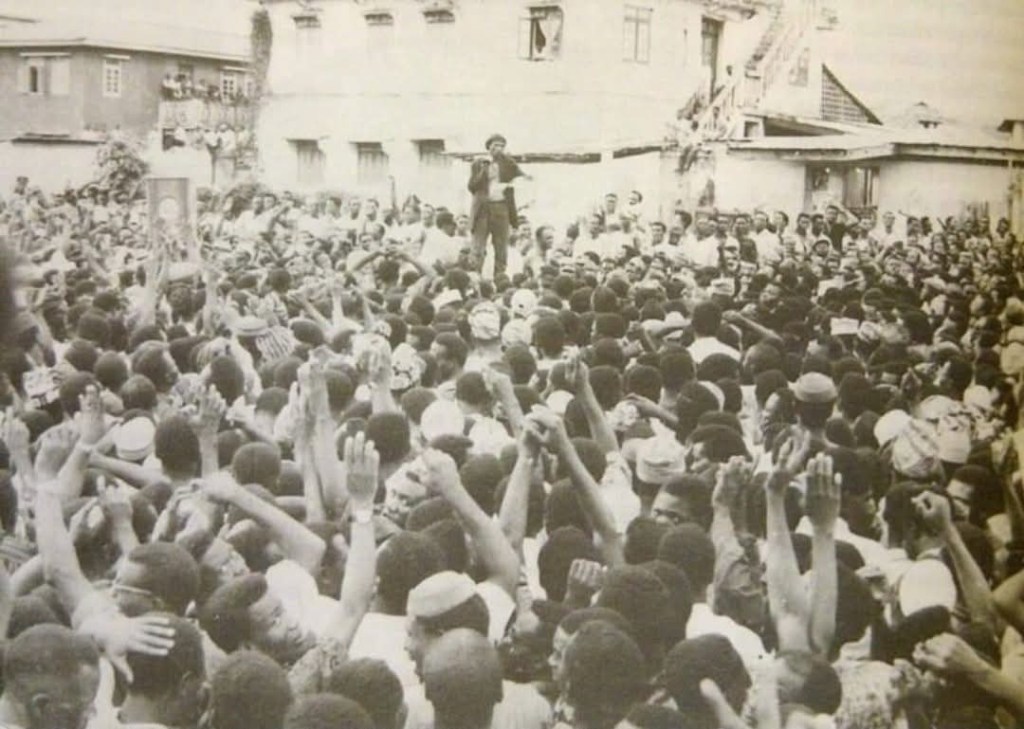
In mid-1945, Nigeria witnessed the first nationwide labor action in its history — a strike that grew to involve an estimated 200,000 workers and seventeen labor unions, forcing the colonial government to confront the economic strain its own wartime policies had created.
The roots of the strike traced directly to World War II. During the war, which the colony had participated in, Nigeria saw high inflation and price increases coupled with stagnant wage growth, and government efforts to control prices had proven largely ineffective. Between 1941 and 1945, the cost of living rose over 50% a burden workers bore directly while colonial administrators simultaneously raised allowances for European staff, adding a stark racial dimension to the grievance.
Organized resistance began building in early 1945. A coalition known as the Joint Executive of Government Technical Workers demanded an increased minimum wage on March 22, 1945, which the government denied on May 2. Workers responded with an ultimatum, warning that without a resolution, they would proceed to seek their own remedy with due regard to law and order on one hand and starvation on the other. A meeting between government officials and labor leaders on May 30 failed to resolve the impasse.
In a bid to defuse tensions, the government released Michael Imoudu — a prominent labor leader who had been imprisoned since 1943 — and approved a small wage increase the following week. The strategy backfired entirely: instead of placating the workers, Imoudu’s release encouraged them, and he became a leader of the strike.
The strike proper began on June 22, 1945, drawing in railway workers, civil servants, and dock workers, with private-sector employees offering solidarity by refusing to handle struck goods. While many nationalists, including Herbert Macaulay, Nnamdi Azikiwe, Adunni Oluwole, and Obafemi Awolowo, supported the strike, members of the Nigeria Youth Movement attempted to sabotage it an early sign of the ideological divides that would later shape Nigeria’s independence movement. Around 40,000 workers, mostly civil servants and railwaymen concentrated in Yorubaland, stayed off their jobs at the strike’s core, though solidarity action rippled far beyond that number.
The action lasted 45 days, spreading even into the British Cameroons, where it continued on an intermittent basis into September. In Nigeria itself, the strike was suspended on August 4, 1945. Despite the deployment of British troops, the strike proved largely successful: the cost of living increase was ultimately awarded in 1946, backdated to the previous year.
Beyond its immediate wage victory, historians regard the 1945 strike as a genuine turning point — the first nationwide action by Nigerians, giving them a sense of national unity and consciousness that fed directly into the broader independence movement gathering momentum through figures like Azikiwe and Macaulay. Scholars have also highlighted an overlooked dimension of the strike’s success: women’s economic independence and community support sustained striking households throughout the standoff, even as male trade unionists publicly framed their wage demands around their status as family breadwinners — a telling irony in a labor dispute fundamentally about survival, dignity, and who counted as a full colonial citizen.