THE COMPANY THAT RULED PART OF NIGERIA BEFORE BRITAIN TOOK OVER
THE COMPANY THAT RULED PART OF NIGERIA BEFORE BRITAIN TOOK OVER
Imagine living in a territory where a private company could negotiate treaties with rulers, control trade, maintain armed forces and exercise administrative powers.
It sounds like something from a fictional story.
But it happened in what would later become Nigeria.
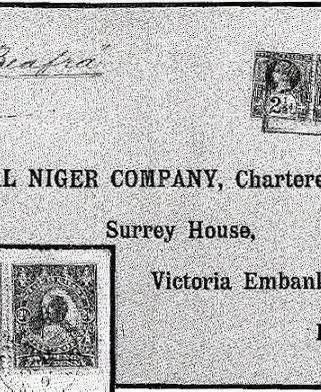
Its name was the Royal Niger Company.
In 1886, the British government granted a royal charter to the company, then known as the National African Company, giving it extensive powers over British commercial interests along the Niger and Benue rivers.
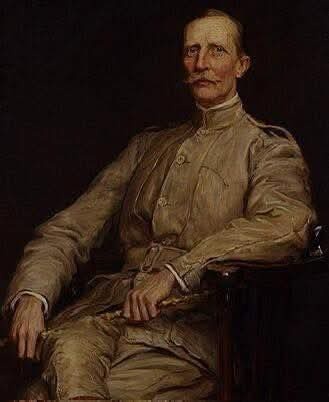
The company was led by the British businessman Sir George Goldie, one of the most important figures in Britain’s expansion into the Niger region.
And this was no ordinary trading company.
Under its charter, the Royal Niger Company could negotiate treaties with local rulers, administer territories under its control, establish trading posts, maintain armed forces and exercise forms of judicial and administrative authority.
In other words, a private commercial organisation was performing functions we normally associate with government.
Its main objective, however, was commercial.
The Niger region was rich in valuable commodities, particularly palm produce, which was becoming increasingly important to European industries.
The company competed with French and other European interests for control of trade along the Niger.
Through treaties, negotiations, commercial pressure and, at times, military force, it expanded British influence across large areas of the Niger region.
But there is an important detail often lost in the popular version of this story:
The Royal Niger Company did not own all of Nigeria.
Nigeria did not yet exist as the country we know today.
Different kingdoms, emirates, communities and political societies controlled different territories, while European powers were competing for influence.
The Royal Niger Company’s authority was therefore concentrated in particular areas rather than over the entire territory that would eventually become Nigeria.
By the end of the nineteenth century, however, Britain’s ambitions had grown beyond what a private company could effectively manage.
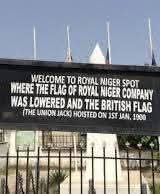
The company eventually surrendered its charter.
In 1899, the British government took over its territories and paid the Royal Niger Company £865,000 for its assets, rights and interests.
The company ceased to operate under its royal charter, while its territories became part of Britain’s expanding colonial administration.
And this is where the story becomes especially important.
The transition did not mean that Nigeria had suddenly become an independent country and then been sold.
Nigeria, as a unified political entity, did not yet exist.
The territories were gradually brought under British colonial control through different stages of conquest, treaties and administration.
The 1914 amalgamation later brought the Northern and Southern Protectorates together with Lagos Colony to form the Colony and Protectorate of Nigeria.
So, no, Britain did not literally “buy Nigeria” from the Royal Niger Company.
But the story reveals something equally significant:
A private company was once given extraordinary political and economic powers in the region that would become Nigeria, and commercial interests played a major role in Britain’s expansion.
Before modern Nigeria existed, there was a struggle over land, trade, resources and political influence.
And the Royal Niger Company stood directly at the centre of it.
The company’s story reminds us that colonial expansion was not carried out by governments alone.
Business, political power and imperial ambition often worked hand in hand.
And long before Nigeria became a country, the Niger was already at the centre of a battle over who would control Africa’s trade and resources.