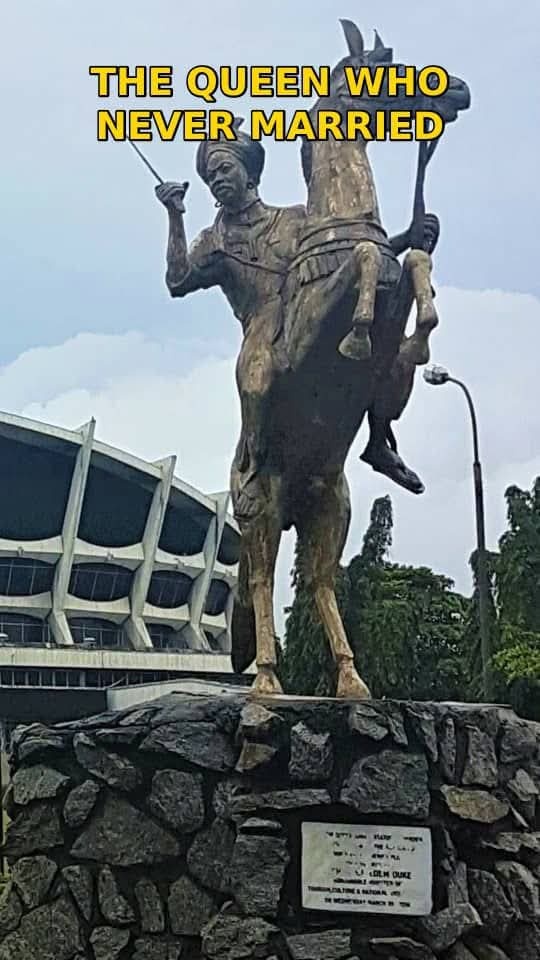
She was not a myth. She was a real ruler of Zazzau, now Zaria in Kaduna State, Nigeria.
She was not a myth. She was a real ruler of Zazzau, now Zaria in Kaduna State, Nigeria.
What history records:
- Born around 1533 to King Nikatau (22nd ruler of Zazzau) and Queen Bakwa Turunku, who herself was the first woman to rule Zazzau 1.
- At age 16, she was named Magajiya (heir apparent) and given 40 female attendants (kuyanga). Hausa praise songs still remember her as “Amina daughter of Nikatau, a woman as capable as a man that was able to lead men to war” 1.
- Her brother Karama became king around 1566. Amina served as leading warrior in his cavalry.
- In 1576, after her brother’s death, she became Sarauniya (queen) of Zazzau, one of the original seven Hausa Bakwai states 2.
- She reigned for 34 years (1576-1610). Three months after coronation, she called her people to “resharpen their weapons” and began expanding Zazzau.
- Her army: 20,000 foot soldiers and 1,000 cavalry 2. She conquered as far as Kwararafa (north) and Nupeland (south), including Bauchi and Yauri, pushing to the Niger-Benue confluence 1.
- When Nupe was conquered, its ruler sent 40 eunuchs and 10,000 kola nuts as tribute – introducing both to Hausaland. This is recorded in the Chronicle of Abuja 1.
- She built fortified earthen walls around cities – known today as “Ganuwar Amina” (Amina’s walls). Some sections still stand around Zaria today. She also strengthened trade routes linking Hausaland to North Africa and introduced kola nut cultivation 3.
- She died around 1610 during a military campaign at Atagara, near present-day Idah 1.
What about the stories?
Oral legends say she took a new husband in every town and beheaded him in the morning so none could tell the tale. This is cited by historian Sidney John Hogben as legend, not verified history 1. Her real legacy is state-building, not that story.
Why dates are debated:
Earliest written source is Muhammed Bello’s Ifaq al-Maysur (1836) 1. The Kano Chronicle (19th century from earlier materials) mentions her but places her in the 1400s. Local Zaria chronicle (published 1910) does not list her at all. Historian Abdullahi Smith places her reign after 1576 1. Historians J.F. Ajayi and Michael Crowder suggest 15th century 4. The 1576-1610 dates are most widely taught today.
Zaria city is named after her younger sister, Zaria. Her mother Bakwa founded the kingdom.
She is remembered today as “Amina, yar Bakwa ta san rana” – Amina, daughter of Bakwa, a woman as capable as a man.
What part of her story should be taught in our schools first – her military strategy, her walls, or her trade routes?