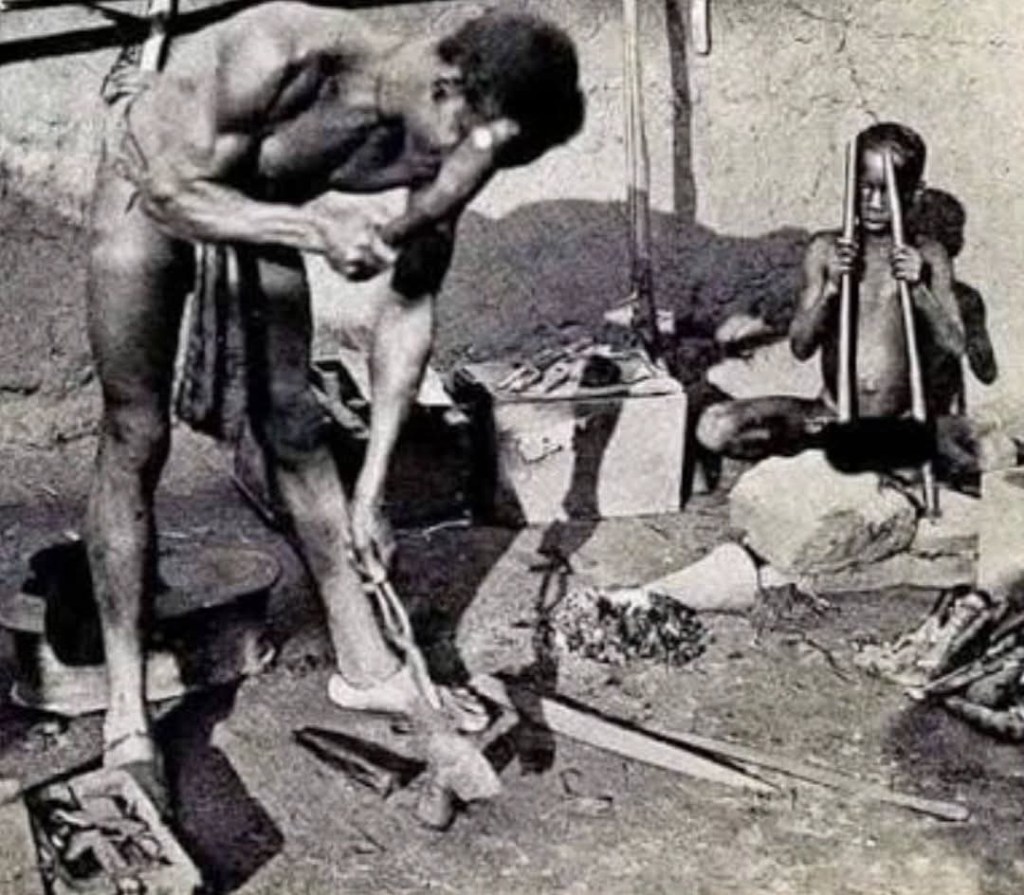
Did you know that local gůn-making enterprises existed in Igboland before the British c0lonial c0nquest?
Did you know that local gůn-making enterprises existed in Igboland before the British c0lonial c0nquest?
Then ask the uncomfortable questions:
What happened to the workshops? What happened to the engineers and craftsmen? And why did the industry never get the chance to evolve?
We are often taught to ask, “Why didn’t Africans develop?”
But perhaps we should ask a more uncomfortable question:
“What happened to what Africans had already begun to develop?”
Colonialism did not arrive in an empty technological landscape. It encountered people who were making, adapting and innovating with the resources and knowledge available to them.
Some indigenous industries were disrupted, suppressed or simply denied the conditions needed to grow.
Before we celebrate the things c0lonialism brought, let us also investigate the things c0lonialism interrupted or destroyed.
Because sometimes the story of Africa’s “backwardness” begins not with what we lacked, but with what we were prevented from becoming.