Major-General Philip Effiong and the End of the Nigerian Civil War
Major-General Philip Effiong and the End of the Nigerian Civil War
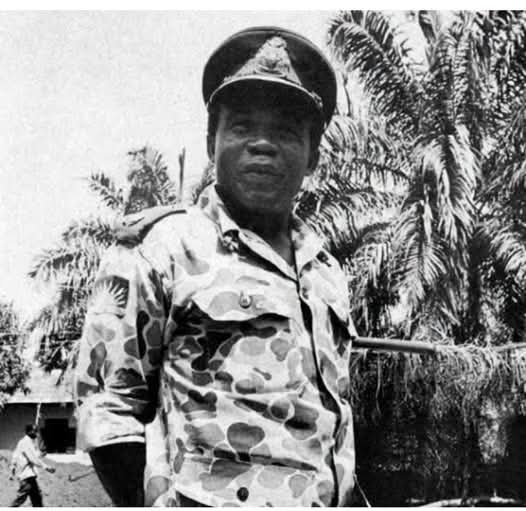
This historic photograph shows Major-General Philip Effiong inspecting a hand grenade around 1969, during one of the most difficult periods of the Nigerian Civil War.
By then, the secessionist Republic of Biafra was under immense pressure. Its territory was shrinking, military resources were depleted, and civilians faced severe hardship as the war entered its final phase.
Philip Effiong was one of Biafra’s most senior military officers. In January 1970, following the departure of General Chukwuemeka Odumegwu Ojukwu, Effiong became the acting Head of State and Commander-in-Chief of Biafra.
He inherited an almost impossible situation.
After nearly 30 months of conflict, Biafra’s military position had collapsed and the civilian population was facing an unprecedented humanitarian crisis. Effiong concluded that continuing the war would only lead to further suffering.
On 15 January 1970, he formally announced Biafra’s surrender, bringing the Nigerian Civil War to an end.
The war, which began on 6 July 1967, remains one of the most devastating conflicts in African history. Millions were affected by displacement, hunger and disease during the conflict.
The photograph of Effiong inspecting a weapon in 1969 presents a striking contrast with his final historic role months later.
In the end, Major-General Philip Effiong became the man entrusted with one of the most difficult decisions in Nigerian history: accepting defeat in order to bring an end to a devastating war.
 Hi welcome to my website