THE TIV PEOPLE OF NIGERIA:
THE TIV PEOPLE OF NIGERIA:
A Heritage of Grit, Culture, and the Food Basket of a Nation 🌾🦁
The Tiv nation is one of the largest ethnic groups in central Nigeria’s Middle Belt, making up roughly 5% of the country’s population.
Primarily concentrated in Benue State, their population also spans Taraba, Nasarawa, Plateau, Cross River, and parts of Cameroon.
They are famous for balancing fierce independence with democratic, egalitarian values.
⏳ Origins and Timeline Lineage:
Trace their ancestry to a single progenitor named Tiv (son of Takuruku). Anthropologically, they belong to the Bantu expansion group.
Migration:
Moved from the DRC through Cameroon, settling in Nigeria’s fertile Benue Valley between the 1600s and 1700s.
Their spiritual staging ground is a sacred hill called Swem.Defenses: They have lived in their location for 300–400 years. Notably, they halted the southern push of the Sokoto Caliphate by defeating Fulani Jihadist forces at the Battle of Abishe in 1806.
🏛️ Traditional Structure & Governance:
Stateless Society:
Historically, the Tiv operated as a classic segmentary lineage society without any central monarchs.
Family Tree:
The entire nation is structured as one giant family tree split into two genealogical branches: Ichôngo and Ipusu.
Grassroots Power:
Traditionally managed by the oldest male in a compound (Orya) and a democratic council of elders (Ityo).
The Modern Kingship:
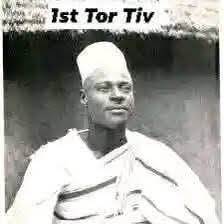
Because there was no king for colonial “Indirect Rule” to exploit, administrative reforms led to the creation of a central paramount stool in 1946—the Tor Tiv, based in Gboko.
💍 Marriage and Belief Systems:
Originally practiced exchange marriage (Kwase-u-musan). This was replaced during the colonial era by a structured, communal bride-price system.
Cosmology:
Centers on a Supreme Creator God known as Aondo, while daily cosmic balance is regulated via Akombo (mystical objects/rituals).
Cultural Arts:
Developed Kwagh-hir, a storytelling art form using intricate masquerades and puppetry. Though over 90% of Tiv are now Christians, these arts remain deeply preserved.
⚔️ The Warrior Spirit & Social Justice:
Martial Culture:
Categorized historically as a martial race due to resisting external subjugation. This defensive unity is fueled by the cultural philosophy of Ayatutu (collective mobilization).
Restorative Justice:
Traditional jurisprudence relied on open public dialogue, ancestral oaths, and elder consensus to resolve disputes through reconciliation rather than punishment.
📈 Major Sector Strengths:
Agriculture:
The definitive backbone of the Tiv.
They are masters of root-crop farming, producing the bulk of Nigeria’s yams, cassava, sweet potatoes, and grains.
Education:
Embraced Western education rapidly via early missionaries, producing top-tier global academics and researchers.
Military & Politics:
Hold a massive footprint in the Nigerian Armed Forces (producing numerous generals) and act as a dominant political voting bloc in the North-Central zone.
⚠️ Modern Challenges & Drawbacks:
Political Polarization:
The political landscape suffers from severe fractionalization and elite infighting, which sometimes slows down rural infrastructural development.
Extreme Egalitarianism:
Because their culture is inherently anti-monarchical and individualistic, it can be difficult to forge a single, unified political front at the federal level.
Let’s discuss in the comments below: 👇🏾
How best can we preserve the deep agrarian power and cultural identity of the Tiv nation while navigating modern political and economic developments?
 Hi welcome to my website