TODAY IN HISTORY, ON THIS DAY-SEPTEMBER 16, 1968: THE DAY OWERRI F€LL TO FEDERAL TR`OOPS
TODAY IN HISTORY, ON THIS DAY-SEPTEMBER 16, 1968: THE DAY OWERRI F€LL TO FEDERAL TR`OOPS
Owerri, Eastern Nigeria — September 16, 1968.
On this day in 1968, the w@r reached another major city in the heart of Biafra.
After weeks of intense f1ghting and a major Federal milit@ry off€nsive into Biafran terri3tory, Owerri fell to Federal tro’ops.
But behind the milit@ry reports, maps and b@ttlefield movements were thousands of ordinary Nigerians whose l!ves were being torn apart by the w@r.
Owerri was home.
It was a city of f@milies, traders, workers, students, ch1ldren and young people who had their own hopes and plans for the future.
Then the f1ghting came.
The Feder@l advance toward Owerri was part of a wider off€nsive known as Operation OAU, which targeted three strategically important Biafran cities — Aba, Owerri and Umuahia.
Aba had f@llen earlier in September.
Now the f1ghting had reached Owerri.
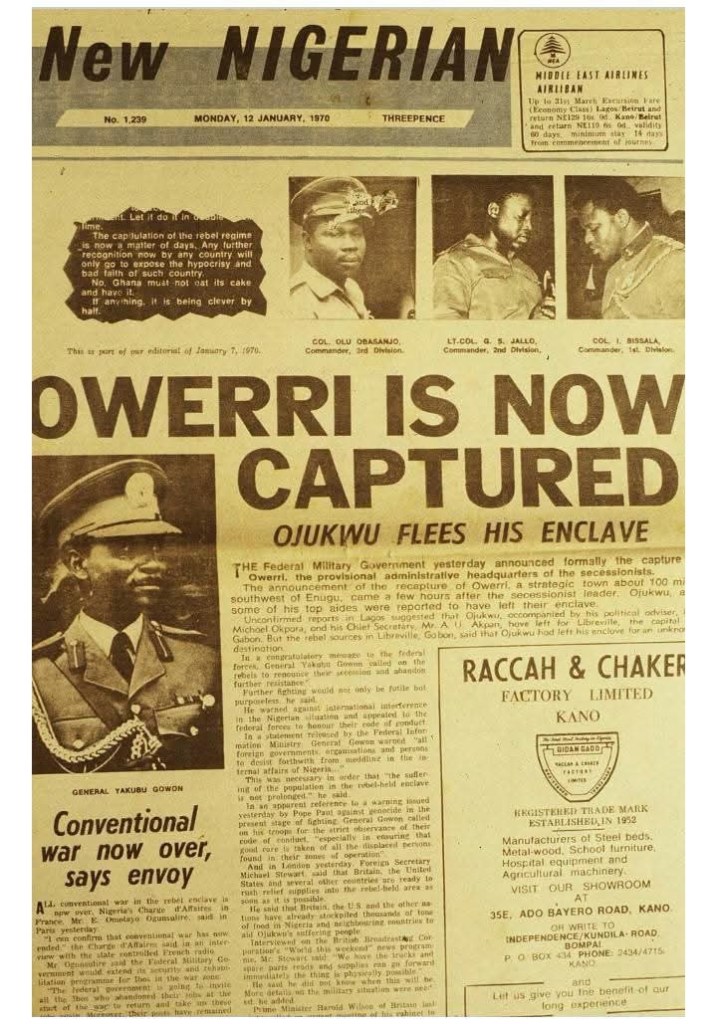
On September 16, 1968, Federal tro’ops captured the city.
For the Federal side, it was a significant military victory.
For Biafra, it was another painful l0ss.
But for the people of Owerri, the meaning of the city’s fall went far beyond milit@ry strategy.
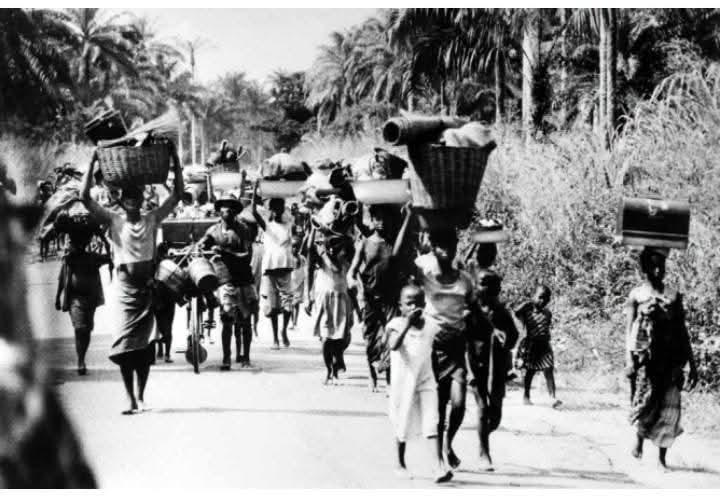
It meant fe@r, displ@cement, sep@ration and uncertainty.
Some f@milies fl€d their homes.
Some hid wherever they could.
Some were sep@rated from loved ones.
And many civili@ns sudd€nly found themselves living in the middle of a w@r they n€ver chose.
The c@pture of Owerri was also far from the end of the story.
Federal tro’ops would discover that holding the city was an entirely different challenge from capturing it.
Biafran f0rces continued to f1ght back, and the struggle for Owerri became one of the most b1tter episodes of the Nigerian Civil W@r.
The city would change hands again before the w@r finally ended.
By the time the f1ghting was over in January 1970, Owerri had witnessed some of the terrible consequences of the confl!ct.
And like Aba, it was not simply a city on a milit@ry map.
It was someone’s home.
Someone’s ch1ldhood.
Someone’s f@mily.
Someone’s memory.
Today, more than five decades later, it is easy to look at September 16, 1968 as just another date in the history of the Nigerian Civil W@r.
But behind the words “Owerri fell” were thousands of individual stories.
There were m0thers waiting for their ch1ldren.
There were f@thers searching for their f@milies.
There were ch1ldren who watched their normal lives dis@ppear.
There were young m€n who went to w@r and n€ver returned.
And there were families who carried the memories of those days for the rest of their lives.
September 16, 1968 — Owerri fell.
But history is not only about who captured a city.
It is also about the people who lived through what happened when the b@ttle came to their doorstep.
If your family lived in Owerri during the Nigerian Civil W@r, what stories were passed down to you?
Share them in the comments. Someone may learn a piece of Nigerian history that was never written in a textbook.
 Hi welcome to my website