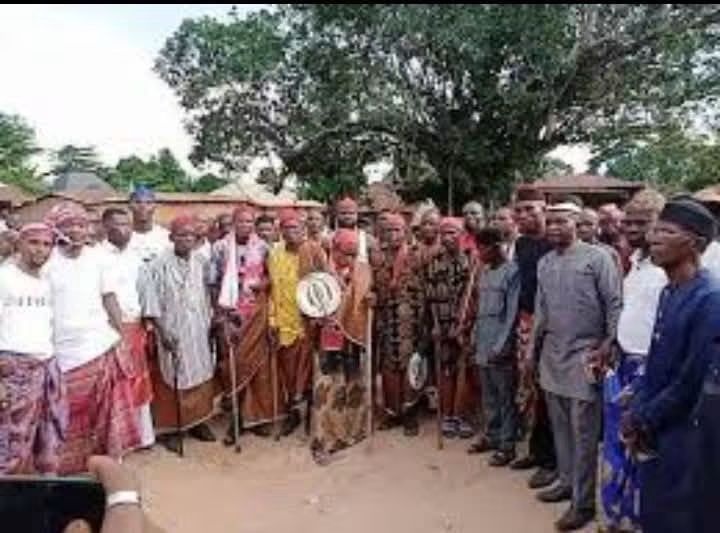
THE ISOBO PEOPLE OF OBUBRA THE INDIGENOUS IGBO COMMUNITY IN CROSS- RIVER STATE
THE ISOBO PEOPLE OF OBUBRA THE INDIGENOUS IGBO COMMUNITY IN CROSS- RIVER STATE
The Isobo people are sub-groups of Ikwo people of Ebonyi state curve into Cross River during the state creation. They are indigenous in Obubra Local Government Area of Cross River State.
In Ikwo, their major centre is Akpawudele (Ekpa-Omaka), with remnants in Ndi-Oka, Ndiagu, and Amagu. In Obubra LGA, they are neighbours to the Echara people, who are also Igbo-speaking. The Isobo are possibly an offshoot of the larger Ikwo clan of the Igbo.
In Obubra, Isobo is made up of three major clans: Isobo-Bikobiko, Isobo-Otaka and Isobo-Otaka.
Politically, they dominate Osopong 2 Ward, one of the 11 wards in Obubra LGA. They control 18 polling units out of the 155 polling units in the LGA. By statistical estimate, the Isobo and their Echara brothers make up about 12% of the population and land mass of Obubra.
This translates to about 130km² of land and an estimated population of 20,705 people based on the 2006 census, though that census remains controversial.
Other Isobo enclaves are scattered in Nd’Oka, Okwuenyim, Nd’Nkash, Appiapum, Nko, Imabana-Ochokwo, Igbo-Imabana, Igbudu in Obubra, as well as pockets in Abi and Yakurr LGAs.
Oral history traces the migration of the Isobo people from NCHONU, over 300-400 years ago. This migration was largely driven by conquest and search for fertile land, which aligns them historically with the Ikwo migration routes. Their long settlement in Cross River has made them a bridge between the Igbo heartland and the Cross River peoples.
The traditional boundary of the Isobo clan is poetically described by our elders as:
_From the uphills of Nko and Ugep, down to the marshy swamps of Bikobiko and Otaka in Osopong. From the remnants of Imabana to the waterside of Adun. And from the hamlets of Nd’oka, Nd’nkash, Okwuenyim and Igbudu, traversing the Ekpanwudeles where the Isobo spirit survives.
The Isobo are culturally Igbo. They maintain the four Igbo market days – Eke, Orie, Afor, and Nkwo, with Nkwo being their main market day. Due to centuries of proximity with their Mbembe neighbours who dominate Obubra, they have also adopted the 6-day week system of the Mbembe.
Their major market in the Ebonyi axis is the famous Igboji Market. Their major festival is the New Yam Festival known as AJI or ORINJI.
New Yam is celebrated above all other crops in Igboland, and Isobo is no exception. The Orinji Festival is celebrated every September and marks the climax of a series of sacred rites. It is not just eating yam, it is thanksgiving, purification and renewal.
The rites are in stages:
a ) OKPATA INE (Festival of the Pumpkin Leaf): This kick-starts the festival. It is announced by a member of the Council of Chiefs. It is exclusively for the ND’OVA (Council of Chiefs). No new yam is eaten on this day. The designated Ova offers sacrifices at the Ezegwuk (Great Playground) for a bountiful harvest and then entertains the Nd’Ova lavishly. It signals the end of famine.
b) EJA NJI (Yam Sacrifice): This is the most important rite. All seven OVAs representing the seven kindreds of Isobo are fully involved. Adorned in their finest regalia, they undertake seven spiritual journeys between Ezegwuk and Edgwuk (Village playground), offering prayers and sacrifices for good harvest and purification of the land.
It is a taboo and desecration for anyone to eat the new yam before this rite. Anyone who does is forbidden from watching the final dance.
The climax is the dance of the OVAs. The OGBUNZE, the first among the OVAs to eat the new yam, dances with the speed of light, and youths scramble to ‘catch’ him. Only few have ever achieved this feat.
After the dance, each Ova returns to his clan with a bag of goodies to share with his people, followed by merriment till late at night. During this period, it is a taboo to quarrel or fight. Violators pay heavy fines. This peace lasts for four days after the festival.
C) OGBUNZE DAY: The day after Eja Nji. On this day, only the Ogbunze harvests new yam and entertains the other Ovas. He is the custodian and enforcer of the peace law.
D) EKOO – THE D-DAY: Early in the morning, the air is filled with joyful shouts from women rushing to harvest new yam: “EKOOOO! EKOBEKO! EKOGBANGHANA RIGBO FUA LECHECHE O!” As children, we were woken from sleep by these shouts. It brought life back to homes ravaged by famine. Neighbours exchange new yam meals, the best farmer is rewarded, men feast together in the Obu (clan hut), young men play a keenly contested novelty football match, and at night, an all-night ball lasts till dawn. That is Ekoo in Isobo!
The Isobo story is proof that Igbo land did not end at the colonial boundary. We are Igbo, we are indigenous, and we are resilient. The divide-and-rule tactics that made us strangers in our own nation must end now.
IGBO BU OFU! We must unite ourselves now or never. End of divide and rule antics.
God bless Isobo people!
God bless Ndigbo!