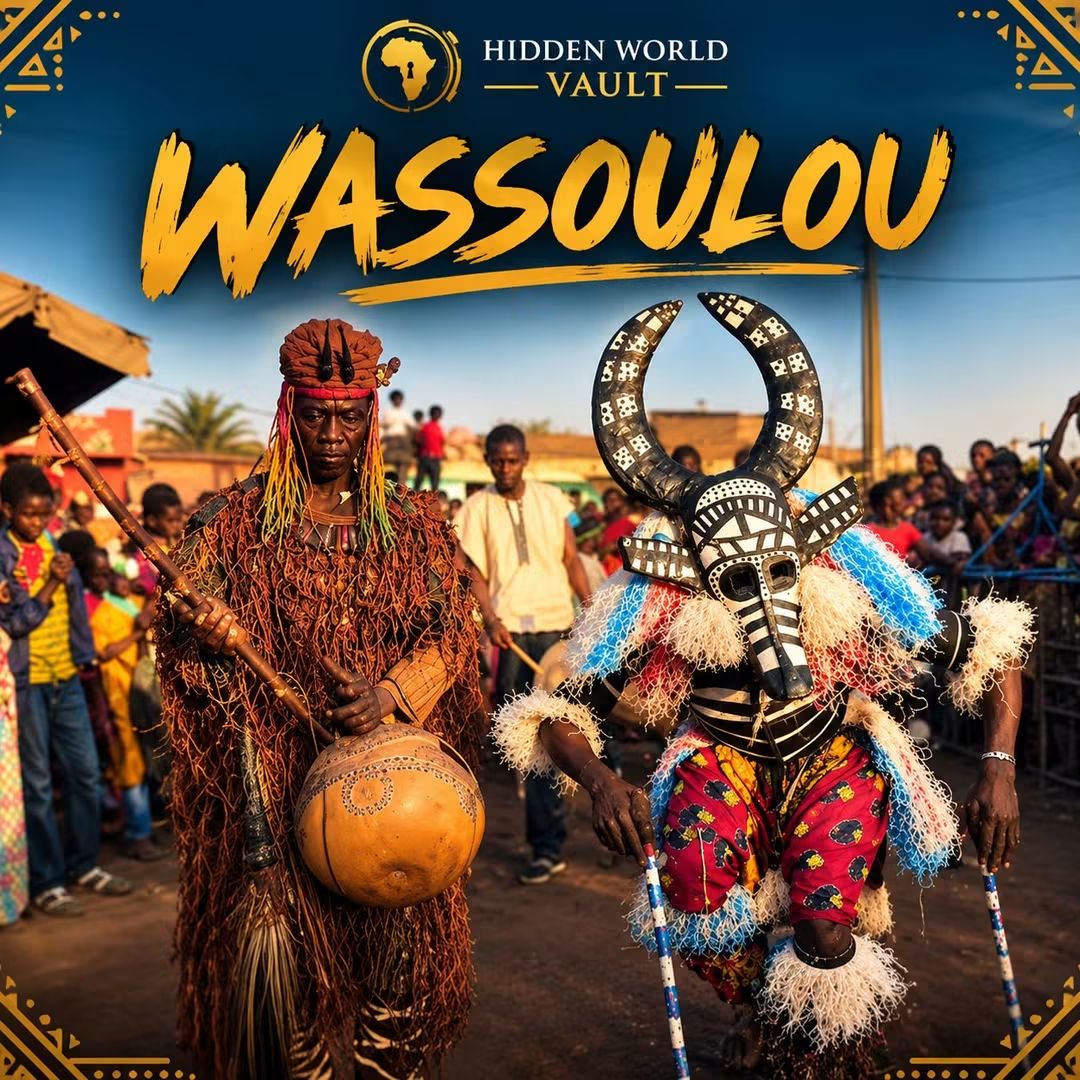
WHY DO SOME FULANI OF WASSOULOU FEEL CULTURALLY CLOSER TO THE MALINKÉS THAN TO OTHER FULANI?
WHY DO SOME FULANI OF WASSOULOU FEEL CULTURALLY CLOSER TO THE MALINKÉS THAN TO OTHER FULANI?
Wassoulou stretches across Guinea, Mali, and Côte d’Ivoire. It has never been an ethnically isolated space. For centuries, Malinkés, Fulani, Bambaras, and other communities have lived alongside one another, moved through the region, formed alliances, intermarried, and shared cultural practices.
That history helps explain why some Fulani communities of Wassoulou may feel culturally closer to the Malinkés than to other Fulani groups.
One important factor is the long-standing influence of the Manding cultural world. Since the time of the Mali Empire, Manding language and traditions have extended well beyond the empire’s political borders. Kinship systems, social organization, oral traditions, language, and certain religious practices all became part of life in Wassoulou.
For some Fulani communities, this influence became even stronger through settlement. Groups that moved away from mobile pastoral life and established permanent communities interacted more closely with the populations around them. Over time, this encouraged marriages, lineage alliances, and deeper integration into local society.
Language played an important role as well. When Malinké became the language used in everyday life, adopting the language also meant participating more deeply in the surrounding Manding cultural environment.
This is why ancestry alone does not always tell the whole story of identity in West Africa. A person’s identity can also be shaped by the language they speak, the community in which they live, family relationships, social networks, status, and political affiliations.
The 19th century brought another important development with the rise of the state founded by Samory Touré. Although his state brought together different ethnic communities, it was strongly rooted in Manding culture. Its political and military organization brought diverse populations into closer contact with Manding language and cultural practices.
The colonial period added another layer. French administrators often placed populations into fixed ethnic categories, even where identities and cultural affiliations were more fluid. Some communities that had already become deeply connected to the Manding cultural world could therefore be classified administratively as “Malinké,” regardless of their earlier origins.
So, the cultural closeness that some Fulani of Wassoulou feel toward the Malinkés is best understood through history, settlement, language, family ties, cultural exchange, and integration.
Identity in Wassoulou has never been simply a matter of ancestry. It has also been something people have lived, shared, adapted to, and passed on through generations.
That is what makes the history of Wassoulou so complex, and so fascinating.

