THE DEMOCRATIC REPUBLIC OF CONGO: THE RICHEST POOR COUNTRY ON EARTH
THE DEMOCRATIC REPUBLIC OF CONGO: THE RICHEST POOR COUNTRY ON EARTH
Come, let me take you deep into the heart of Africa, to a country sitting on some of the most strategically important mineral resources on the planet.
The Democratic Republic of Congo, often simply called the DRC or Congo-Kinshasa, is one of the world’s great paradoxes.
It is enormously rich in natural resources, yet millions of its people continue to live in poverty.
Beneath Congolese soil are vast deposits of cobalt, copper, gold, diamonds, tantalum, tin, tungsten and other minerals.
The country also possesses important lithium resources, including the major Manono lithium project in the southeast.
And then there is COBALT.
According to the U.S. Geological Survey, the DRC was the world’s leading producer of cobalt in 2024, accounting for about 75% of global mine production.
It also held an estimated 55% of the world’s cobalt reserves.
Why does that matter?
Cobalt is an important component in many rechargeable batteries used in electronic devices and electric vehicles.
Copper is essential to electrical infrastructure, while tantalum, commonly associated with coltan ores, is used in electronic components.
So, when the world talks about smartphones, advanced electronics, electric vehicles and the transition toward cleaner technologies, Congo is part of that story.
But here is the painful contradiction.
A country with enormous mineral wealth still struggles with basic infrastructure and access to essential services.
The World Bank estimates that only about 22.5% of the population had access to electricity in 2024.
In some mining communities, the people living beside valuable deposits have seen very little of the wealth generated from those resources.
And the human cost can be devastating.
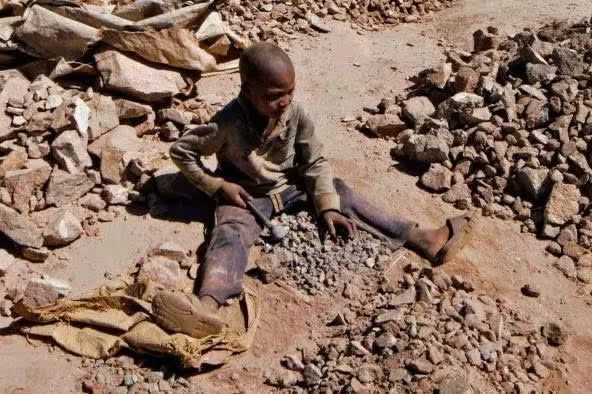
Artisanal and small-scale mining has been associated with dangerous working conditions and child labour, particularly in parts of the cobalt-producing regions.
UNICEF has documented children working in copper and cobalt mines, carrying, crushing and washing ore instead of attending school.
One UNICEF account documented a 12-year-old girl who had spent three years working in an artisanal copper and cobalt mine after her father died.
This is not simply a story about minerals.
It is a story about poverty, governance, exploitation, international supply chains and the enormous gap between the value of a natural resource and the lives of the people living above it.
The DRC’s mineral wealth has also existed alongside decades of political instability and armed conflict, particularly in the eastern part of the country.
But it is important not to reduce the entire Congo story to war.
The country is much larger than its conflicts, and its people, history, culture and enormous economic potential deserve to be understood beyond the headlines.
So perhaps the real question is not whether Congo is rich.
It clearly is in natural resources.
The bigger question is:
WHY HAS SO MUCH OF THAT WEALTH FAILED TO TRANSLATE INTO BROAD PROSPERITY FOR THE CONGOLESE PEOPLE?
Who controls the resources?
Who makes the biggest profits?
How much value is created inside Congo, and how much leaves the country as raw material?
And can Congo eventually build an economy in which its enormous mineral wealth produces jobs, electricity, schools, hospitals, roads and genuine prosperity for its people?
The Democratic Republic of Congo may be one of the richest countries on Earth in natural resources.
But its greatest wealth may not be what lies beneath the ground.
It may be the millions of Congolese people who have yet to fully benefit from what their country possesses.
This is Africa.
This is Congo.
And this is a story the world should never stop asking questions about.

