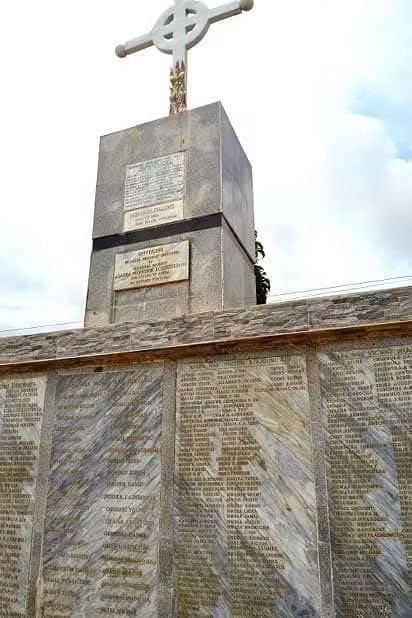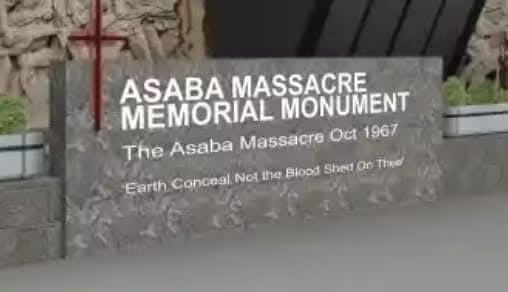
TODAY IN HISTORY: OCTOBER 7, 1967 — ASABA MASSACRE TOOK PLACE.
TODAY IN HISTORY: OCTOBER 7, 1967 — ASABA MASSACRE TOOK PLACE.
59 years ago today, Asaba was drenched in the blood of its own people.
On October 7, 1967, during the Nigerian Civil War, one of the darkest chapters in the history of the Igbo people unfolded in Asaba, on the western bank of the Niger.
Asaba was an Igbo town, although it was not part of Biafran territory then. Federal troops had entered the town while pursuing retreating Biafran forces. In the days that followed, civilians were killed in large numbers.
But what happened on October 7 remains particularly painful.
Believing that showing support for “One Nigeria” would calm the soldiers, many Asaba people came out dressed in their traditional akwa-ocha, their white ceremonial clothing. They gathered, sang and danced.
They did not come out with guns.
They did not come out to fight.
They came out as civilians.
They trusted that they would be safe.
Instead, men and older boys were separated from the women and children and taken to Ogbe-Osowa Square.
There, hundreds were shot.
Historical research estimates that between 700 and 800 people were killed in the main massacre, although the exact number of victims remains uncertain, while other historical accounts place the total number of people killed during the wider violence in Asaba at over 1,000.
Think about that for a moment.
A father.
A husband.
A son.
A brother.
A young man with a future ahead of him.
One moment, they were standing among their people.
The next, they were gone.
Women and children were left behind to search for the bodies of their husbands, fathers, brothers and sons. Many victims could not even receive proper burials; some were placed in mass graves, while others were thrown into the Niger.
This is the pain of Asaba.
The pain is not only in the number of people who died.
It is in the families that were permanently broken.
The children who grew up without fathers.
The women who became widows.
The mothers who waited for sons who would never return.
The survivors who carried the memories for the rest of their lives.
And the generations that inherited a story of unimaginable loss.
For the Igbo people, Asaba is not merely a date in a history book.
It is a wound.
It is a reminder of the suffering experienced by Igbo communities during the Nigerian Civil War.
And for many who remember the massacre, the painful truth is simple:
The people of Asaba were civilians. Their great crime, in the eyes of those who persecuted them, was that they were Igbo.
We remember them today—not to teach hatred, and not to call for revenge, but because the dead deserve to be remembered and history deserves to be told.
We must remember the names.
We must preserve the testimonies of survivors.
We must teach our children.
We must tell the story to those who were never born when the guns were firing.
Because when the last survivor is gone, the responsibility of remembering will belong to us.
OCTOBER 7, 1967
ASABA REMEMBERS.
NDỊ IGBO REMEMBER.
WE REMEMBER THE DEAD.
WE HONOUR THE SURVIVORS.
WE WILL NOT FORGET.
May the souls of all those who lost their lives rest in peace.
Ka ndị anyị nwụrụ anwụ zuru ike n’udo. 🕯️
ASABA MASSACRE — NEVER FORGOTTEN.