THE GOWON LIE, PART TWO: The Widow, the Orphan, and the General Who Rewrote Their Graves
THE GOWON LIE, PART TWO: The Widow, the Orphan, and the General Who Rewrote Their Graves
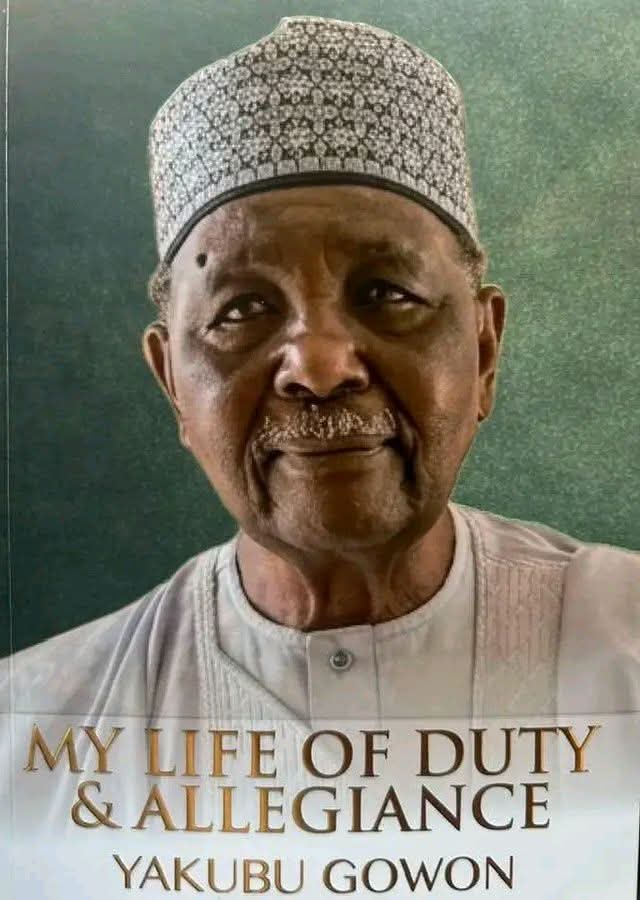
This is the second part of my reading of General Yakubu Gowon’s 881-page memoir, My Life of Duty and Allegiance. The first part dealt with the phantom officer of page 201, the shivering fever of Aburi, the arithmetic of page 467, and the frame-up of Ironsi. This part deals with the people the book walked past.
In the first piece I wrote that Gowon had convicted himself. I said he had laid the evidence on the table himself, chapter by chapter, and invited us to examine it.
I have since gone back to those pages with the testimonies of survivors beside them. What I found is not a series of isolated errors. It is a pattern. The same instinct runs through the whole book: wherever a man or a woman could embarrass him, they are diminished, forgotten, or quietly written out. Wherever a figure could be defended, the defence is generous.
The general has spent sixty years curating a story in which he is the reluctant saviour and everyone else is a footnote. Here are the footnotes he left out.
EXHIBIT G: The Dead Man He Called “Temperamental”
On page 185, Gowon explains why he did not recommend Brigadier Samuel Adesujo Ademulegun to be General Officer Commanding. His reason, in his own words, is that “Ademulegun’s highly temperamental disposition knocked him off.”
Read that sentence again, and then remember what happened to the man it describes.
Brigadier Ademulegun was not a temperamental officer. He was a decorated soldier who had led Nigerian troops in the Congo and had been sent to quell a mutiny in Tanzania in 1964. His daughter, Solape Ademulegun-Agbi, has publicly challenged Gowon’s characterisation, saying that every other report, from officers both dead and living, describes her father as the opposite, a disciplined officer.
The timing is what matters here. Gowon needed a reason to explain why the man who was senior to him did not get the top job. The dead cannot correct the record. The general knows this. And so a man murdered in his bed becomes, in the pages of a memoir written sixty years later, simply someone with a difficult temperament.
EXHIBIT H: The Night They Killed the Pregnant Wife
What happened in the Ademulegun home in Kaduna on 15 January 1966 is one of the most documented horrors of that night, and the memoir treats it with clinical distance.
Major Timothy Onwuatuegwu, a man the Ademulegun children called uncle, arrived at the house with thirteen soldiers. The Brigadier was asked for the keys to the armoury. He refused. His wife, Latifat Feyisitan Abike Ademulegun, known as Sisi Nurse, was eight months pregnant. She stood between her husband and the intruders and pleaded for his life.
They shot them both.
Six-year-old Solape and four-year-old Goke were in the room. They watched their parents die. The baby in the womb never drew breath.
The memoir does not linger on this. It does not tell you that the killers were led by a family friend. It does not tell you that the children were in the room. It does not tell you that an unborn child died with its mother.
It moves on.
EXHIBIT I: Honour for the Killer, No Grave for the Victim
Here is the detail that should trouble every reader of that book.
The man who led the coup in which Ademulegun and his wife were killed was buried with full military honours on Gowon’s orders. In the memoir, he is eulogised as “a misguided but gallant soldier with principles.”
Brigadier Samuel Ademulegun, who died at his post, has no known grave.
For sixty years his children have been searching. They have written letters. They have sought meetings with senior officers. They have been passed from desk to desk and told nothing. Solape has said it plainly: “We do not ask for material things. We are appealing to the Commander-in-Chief, to please instruct the Army or the Archives, to please dig up History and let us know where our parents were buried.”
Gowon was Head of State for nine years. He had the power to order an inquiry. He had the power to open a file. He had the power to tell two orphaned children where their mother and father were laid.
He honoured the man who pulled the trigger. He never found the grave of the man who died.
EXHIBIT J: The Fever That Sunk a Nation
I covered Aburi in the first piece, but the fever deserves a second look, because in the sequel it becomes a template.
Gowon says he signed the Aburi Accord while suffering from a serious attack of fever, and that he was therefore unable to make a clear decision on returning to Nigeria.
The Aburi proceedings were recorded. On that recording, the general is lucid, engaged, and composed. He negotiates a confederate structure with a clear head. He does not sound like a man who has lost the capacity to decide. He sounds like a man who signed something and then discovered that the people around him in Lagos did not want it.
The fever did not arrive until the agreement needed to be abandoned. That is what makes it an alibi rather than an illness. A man can be sick and still know what he signed. What he cannot do is be sick on demand, at the exact moment the retreat becomes convenient.
EXHIBIT K: The Blockade and the Missing Question
The memoir treats the blockade as a strategic necessity and starvation as a consequence of war. What it will not do is describe the blockade as it was actually experienced: the food that could not pass, the relief flights that were turned away, the children who died in their mothers’ arms while the federal government argued about sovereignty.
A memoir is judged by the questions it refuses to ask. Page after page goes to cabinet meetings, diplomatic missions, command decisions, and the general’s relationships with his officers. The camera stays in the corridors of power. It does not turn toward the compound where a mother buried her son.
That is not an oversight. It is a choice. The silence protects him from having to explain why hunger was permitted to do the work that soldiers could not.
EXHIBIT L: The Pattern
Set the exhibits side by side and the method becomes clear.
A dead officer is diminished so that a living general’s rise looks inevitable. A murdered couple is passed over in silence so that the manner of their death does not raise questions about who benefited. The leader of the coup is honoured so that the coup itself can be reframed as the work of principled but misguided men. A fever is produced so that the breaking of a peace agreement can be blamed on illness rather than decision. A blockade is described as strategy so that the deaths it caused can be filed under war.
Each of these is defensible on its own. A memoirist is entitled to his interpretation. But a pattern of defences that all point in the same direction, away from the author and toward the dead, is not interpretation. It is curation.
EXHIBIT M: The Twenty Pounds and the Missing Chapter
There is a policy the memoir does not discuss at any length, and its absence is one of the loudest silences in the book.
After the war, the federal government demonetised the Biafran currency. Every family in the defeated region was allowed to exchange a fixed amount, a twenty pounds regardless of what they had held in the bank. Savings that had taken a lifetime to accumulate were wiped out overnight. Businesses collapsed. Properties were declared “abandoned” and seized. A people who had already lost their homes, their schools and their hospitals were then stripped of whatever remained in their accounts.
The memoir discusses reconstruction. It discusses reconciliation. It does not discuss the twenty pounds. It does not discuss the abandoned properties policy. It does not discuss what it means to tell a trader that the money he saved for thirty years is now worth the price of a bag of rice.
That omission is not accidental. To describe the twenty pounds honestly would raise a question the general cannot answer: if the war was fought for unity, why was the peace designed as punishment?
EXHIBIT N: The Title That Convicts Him
The book is called My Life of Duty and Allegiance.
Duty and allegiance are the words of a subordinate explaining himself to a superior. They answer the question “did you obey?” They leave untouched the question “was the order just?”
A head of state does not owe duty and allegiance. A head of state receives them. He is owed the loyalty of the citizens he governs. The vocabulary of the title tells you, before you open the book, where the author thinks he stands in the story. He is not the man who gave the orders. He is the man who followed them.
That framing runs through all 881 pages. Every decision is explained as something he was pushed into. The coup. The war. The blockade. The abandonment of Aburi. In each case, the general is responding to events. In each case, someone else is the author of the moment.
A man cannot be the reluctant saviour and the commander-in-chief at the same time. The book wants both. The record does not permit both.
EXHIBIT O: The Memory That Remembers Everything It Needs To
The memoir tells us, early and often, that the author’s personal records were lost in the 1975 coup and that the book was therefore written largely from memory. It is offered as an explanation for any inaccuracy the reader might find.
And yet look at what this memory remembers. It remembers who recommended whom for GOC in 1965, down to the personality flaws of each candidate. It remembers the order of finish at party primaries decades later. It remembers the name of a British minister who visited in 1968 and the joke that was made about his title. It remembers a Central Bank governor walking into his office smiling because the country had more money than it knew what to do with.
That is not a failing memory. That is an exceptional one, deployed with great care.
Now look at what the same memory cannot retrieve. It cannot retrieve the number of the dead. It cannot retrieve the decision to sustain the blockade. It cannot retrieve the moment relief flights were turned back. It cannot retrieve the twenty pounds.
A memory that is precise about who recommended whom and vague about how many people starved is not a memory in decline. It is a memory with a filing system.
EXHIBIT P: The Living Protected, the Dead Corrected
There is a courtesy in this book that is extended only in one direction.
The living are handled with care. When the author reaches the events of 1975, he notes that he prefers to leave certain people to their consciences rather than expose them. It sounds like mercy until you notice that the consciences in question belong to men who have already died. The courtesy is cheap because the men cannot answer.
The dead, meanwhile, are corrected freely. Ademulegun is temperamental. Murtala is contentious and highly impulsive, complete with schoolboy anecdotes. Ironsi “must have known.” The leader of the 1966 coup is misguided but gallant. Every dead man is assigned a character by a living man who outlasted him.
That is not history. That is a courtroom where the defence has outlived the prosecution and is now cross-examining the graves.
EXHIBIT Q: The Slogan That Replaced a Policy
“No victor, no vanquished” is offered in the memoir as a statement of intent, a gesture of mercy from a victorious commander.
The history that followed tells a different story. The vanquished came home to find their currency worthless, their properties seized, their civil servants dismissed, their region given a fraction of what was spent rebuilding elsewhere. They came home to a federal structure that concentrated power in the hands of the men who had won.
A phrase that promised equality became a phrase that allowed the country to move on without ever accounting for the war. It gave the North a sense of its own generosity while the East carried the bill. It is the most successful piece of public relations in Nigerian history, and it is still working.
EXHIBIT R: The Massacre He Does Not Name
There is an event in the war that the memoir passes over almost entirely, and its name should be written in every account of that period.
Asaba. October 1967. Federal troops entered the town. Hundreds of men were rounded up and shot in the open. The number is usually put at around seven hundred, though the true figure has never been established because no inquiry was ever held. Women and children were among those who witnessed it. The town still remembers.
Gowon did not order Asaba personally. Commanders on the ground did. But a commander-in-chief is responsible for the conduct of his forces, and the memoir offers no accounting of it. No investigation. No explanation. No apology.
A book about duty and allegiance that cannot account for the conduct of the army it commanded is not a book about duty. It is a book about reputation.
The Verdict: A Monument to the People He Walked Past
The first piece ended with the claim that Gowon had convicted himself. This second piece adds the reason the conviction matters.
He offers a ghost to explain his role in July 1966.
He offers a fever to explain his betrayal of Aburi.
He offers a character flaw to explain why a dead hero was passed over.
He offers a slogan to explain a peace that was never made.
He offers silence where the graves should be.
The story of Nigeria is not the story of generals who write memoirs. It is the story of two children in a bedroom in Kaduna, and a woman eight months pregnant standing between her husband and a gun, and a family still waiting after sixty years to be told where their parents are buried. It is the story of a trader whose savings became twenty pounds. It is the story of a town that watched its men shot in the open and was never told why.
The war ended in 1970. The lie has lasted sixty years. And the bones of Brigadier and Mrs. Ademulegun are still somewhere in Kaduna, unknown to their children, while the man who could have found them signs copies of a book about his duty.
A lie that has outlived two generations has already begun to die. What remains is for us to bury it.

