
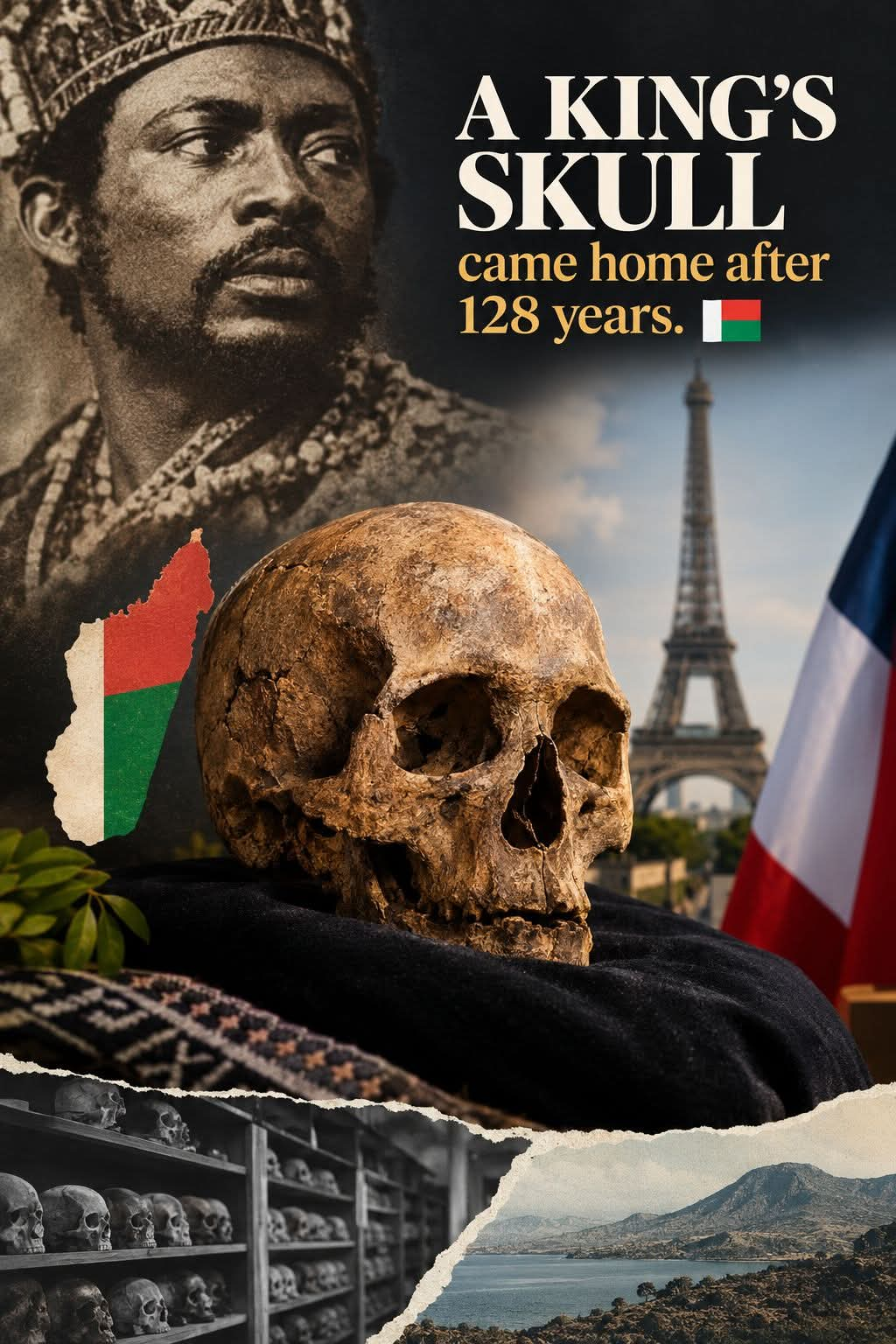
A king’s skull came home after 128 years. Here is what that does and doesn’t mean.
A king’s skull came home after 128 years. Here is what that does and doesn’t mean. 🇲🇬
On 26 August 2025, France handed over three Sakalava skulls at its culture ministry in Paris. One is presumed to be that of King Toera, who was beheaded by French troops after the 1897 massacre at Ambiky. They reached Madagascar on 1 September.
It was the first return under France’s 2023 law on human remains. Culture minister Rachida Dati said the skulls entered national collections “in circumstances that obviously violated human dignity and occurred in an atmosphere of colonial violence.”
Note the word “presumed.” Experts confirmed the skulls are Sakalava, but could only presume one is Toera’s. After 128 years in museum storage, even identity is uncertain.
The scale is far larger than three skulls. France’s natural history museum is estimated to hold over 20,000 human remains. In March 2026, a Guardian investigation counted 11,856 African human remains in UK institutions, 6,223 of them at Cambridge’s Duckworth Laboratory.
Objects have moved slowly. France has an estimated 90,000 sub-Saharan African objects in public collections, and had returned only about 28 by 2022. In April 2026, Parliament passed a framework law to speed up returns of colonial-era cultural property. It doesn’t say which objects will go back or when.
Sarah Baartman came home in 2002, nearly two centuries after she was first exhibited in Europe. Toera came home in 2025. Families are still waiting on the remains of their ancestors, and campaigners say Europe’s museum storerooms hold a colonial legacy that has yet to be addressed. 🖤

