WHY DOES THE KIKUYU–LUO POLITICAL RIVALRY REFUSE TO DIE? A HISTORICAL PERSPECTIVE
🇰🇪 WHY DOES THE KIKUYU–LUO POLITICAL RIVALRY REFUSE TO DIE? A HISTORICAL PERSPECTIVE
Kenya’s political history presents one of Africa’s greatest paradoxes.
The two communities often portrayed as political rivals have, at some of the country’s most defining moments, worked together to shape the nation.
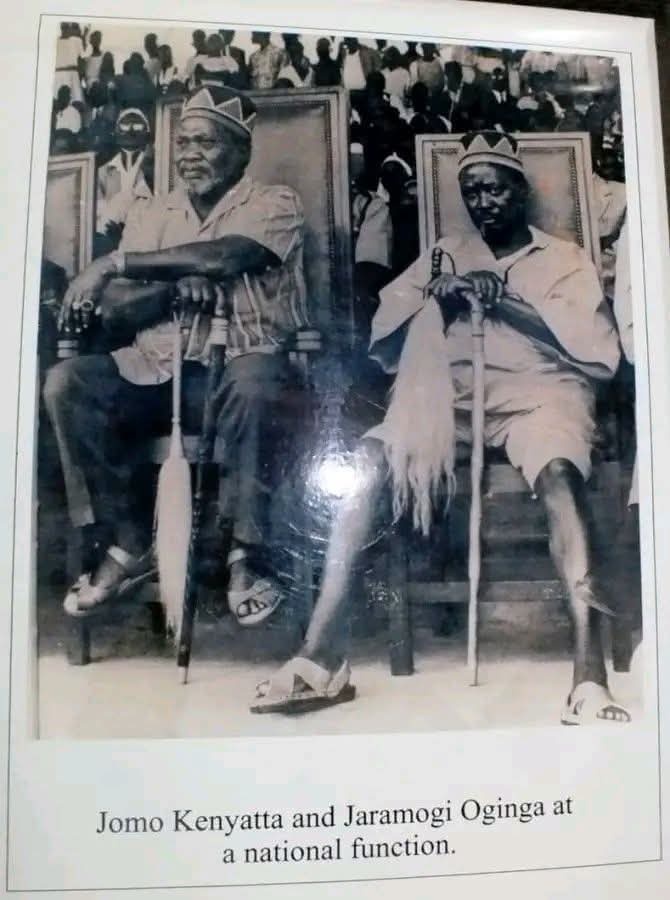
In the struggle for independence, Jaramogi Oginga Odinga became one of the loudest voices demanding the release of Jomo Kenyatta, declaring that there would be “No Independence Without Kenyatta.” Their alliance symbolized a united Kenya fighting colonial rule.
Around the same period, Tom Mboya led the famous Airlift Africa programme, securing scholarships that enabled hundreds of East Africans from different ethnic communities—including Kikuyus, Luos, Luhyas, Kambas, Kalenjins and many others—to study in North America. It was a national investment in Kenya’s future.
But after independence, the dream of unity began to fracture.
Political and ideological differences between Kenyatta and Jaramogi led to a bitter split. The emergence of opposition politics, disputes over governance, and competition for influence created divisions that would shape Kenyan politics for generations.
Then came one of the darkest moments in Kenya’s history—the assassination of Tom Mboya in 1969. Although a suspect was convicted, the tragedy left many unanswered questions in the minds of Kenyans and deepened mistrust between political camps.
Yet history also reminds us that reconciliation has always been possible.
In 2002, Raila Odinga’s famous “Kibaki Tosha” declaration united the opposition behind Mwai Kibaki and helped end nearly 40 years of KANU rule.
Twenty years later, former rivals again surprised the nation when Uhuru Kenyatta supported Raila Odinga’s presidential bid in 2022, proving that in Kenyan politics, permanent enemies rarely exist.
So why does the rivalry remain so powerful?
Documented history suggests the roots lie not in ordinary Kikuyus or Luos, but in decades of political competition, unresolved historical grievances, disputed elections, perceptions of unequal access to state power, and the repeated use of ethnic identity as a political tool.
There is no conclusive documented historical evidence that all Kikuyus took a collective oath against Luos, just as there is no evidence that Luos as a people believe Kikuyus can never be trusted. Such narratives are sweeping generalizations that oversimplify a much more complex history.
The real lesson is this:
Whenever Kenya’s leaders have chosen cooperation over confrontation, the nation has moved forward. Whenever ethnic politics has overshadowed national interests, ordinary Kenyans—regardless of tribe—have borne the greatest cost.
History is not meant to keep us fighting yesterday’s battles. It is meant to help us build a better tomorrow.
What are your thoughts? Is the Kikuyu–Luo rivalry driven more by history, politics, or the manipulation of ordinary citizens by political elites? Share your views respectfully.