THE LIST HAD HIS BEST FRIEND’S NAME
THE LIST HAD HIS BEST FRIEND’S NAME
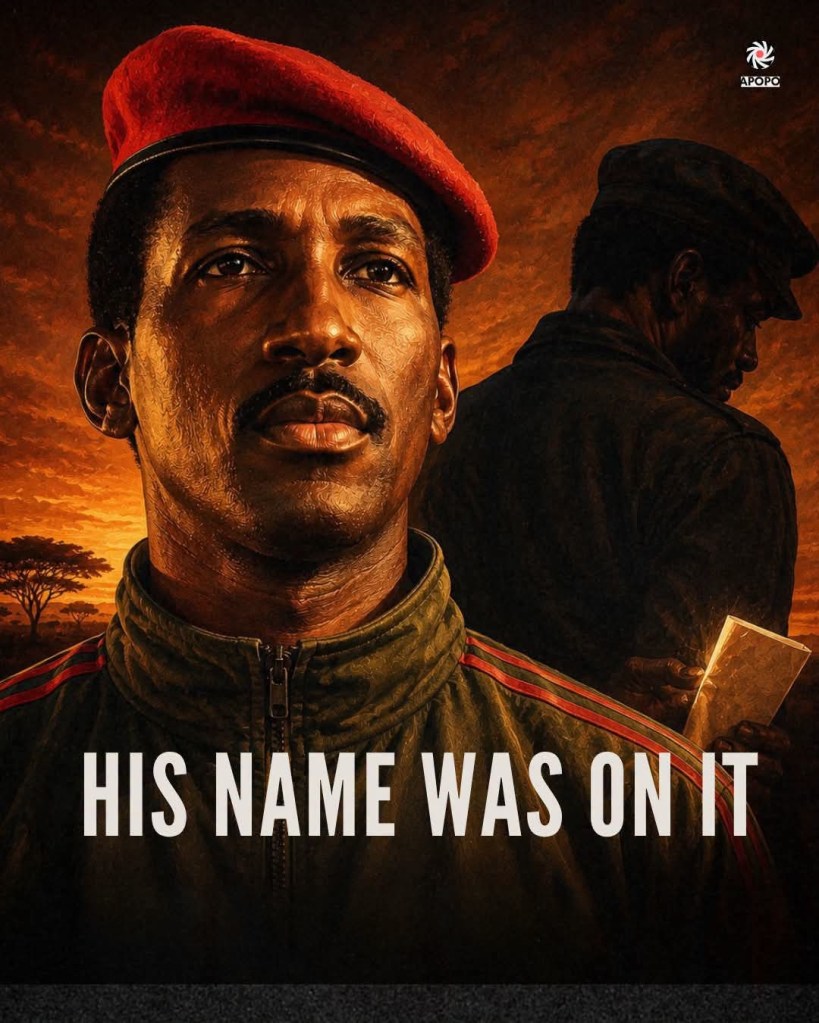
Thomas Sankara had already been warned about the man he refused to fear.
Ouagadougou, Burkina Faso. October 15, 1987.
For weeks, the signs had circled him like dust before a storm.
Friends lowered their voices when certain names were spoken.
His security men came to him with a list—names to arrest before it was too late.
Near the top of that list, witnesses say, was one name:
Blaise Compaoré.
Thomas looked at it…
…and set it aside.
Not Blaise.
Anyone but Blaise.
They had come up together—young officers with borrowed books and impossible dreams.
Blaise had stood beside him when the revolution was still a rumor.
He had helped carry it into power.
He had become family in every way but blood.
Thomas was godfather to his child.
You do not dig a trench against your own shadow.
Powerful interests wanted him gone.
Thomas saw only one threat—and refused to believe it wore the face of a friend.
The aides returned.
The warnings grew sharper.
More specific.
Dates were being whispered now.
Plans.
Each visit left Thomas with fewer friends willing to speak…
…and fewer options left to take.
According to several accounts, he answered with the calm of a man who had already made his decision:
“If the revolution must survive by devouring its own, then let it fall.”
He would not arrest the man he still called his brother.
On the afternoon of October 15, 1987, Thomas walked into a meeting at the Conseil de l’Entente, unarmed, wearing his tracksuit.
He still held the office.
They already held the building.
The meeting began like dozens before it.
The same comrades.
The same revolution they had built together.
Nothing looked different.
That was the danger.
Outside, armed men quietly took their positions.
Inside, Thomas continued the meeting.
One familiar face after another entered the room.
No one raised an alarm.
No one warned him.
The trap did not announce itself.
It simply waited.
According to several accounts, Thomas told the men beside him there was nothing to fear.
Then the gunfire came.
A single, organized burst.
Thomas Sankara was thirty-seven years old.
His body was buried quickly in a grave his family was forbidden to approach—as if haste could bury the truth with him.
Only later did the full picture emerge.
The orders traced back to Blaise Compaoré.
The brother.
The godfather of his child.
The name on the list Thomas had set aside had reportedly been preparing for weeks—waiting, watching, stepping into the clearing only when it was safe.
Blaise Compaoré ruled Burkina Faso for twenty-seven years.
For twenty-seven years, the radio stations that once carried Thomas’s voice carried silence instead.
Then, in 2022, a military court convicted Compaoré in absentia for his role in the assassination.
Across Africa, statues of Thomas Sankara rose in the quiet he left behind.
Thomas once said:
“You can kill revolutionaries, but you cannot kill ideas.”
He was right about the second part.
The meeting ended.
The trust that carried him into that room never walked back out.
History remembers the president who ruled for twenty-seven years.
We remember the man who was handed the knife’s name—and set the list aside.
He was warned. He refused to act.
Was that the highest form of loyalty—or the one mistake a revolutionary could not afford?