Behind Every Soldiers was Women Who Refused To Be Break
Behind Every Soldiers was Women Who Refused To Be Break
Biafra Civil Defense in Enugu
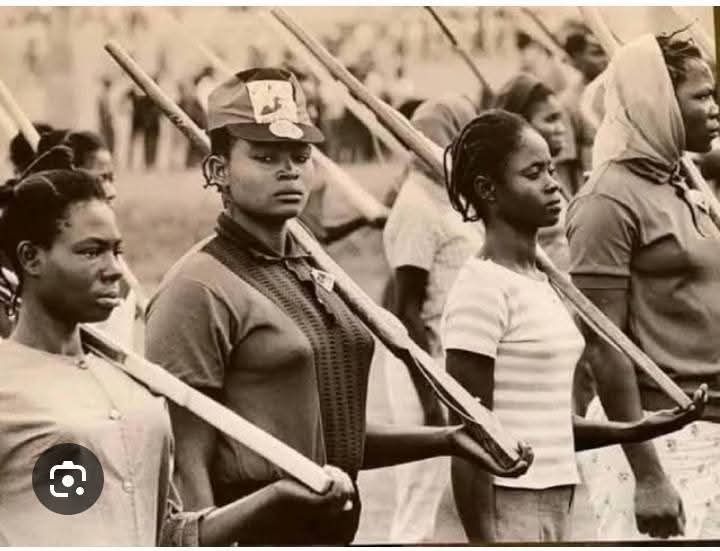
On August 17, 1967, AFP photographers captured a striking image in Enugu, the capital of the newly declared Republic of Biafra. Young women of the Biafran civil defense were seen parading in formation during military training. Dressed in simple uniforms, they marched with discipline through the city streets, a symbol of how deeply the war was mobilizing everyday citizens.
Barely five weeks had passed since Ojukwu declared Biafran independence on May 30, 1967, and the Nigerian Civil War had officially started on July 6. With federal troops advancing and manpower stretched thin, Biafra turned to civil defense units to help with logistics, air-raid preparedness, first aid, and local security. The women’s parade was both practical training and public morale-building — showing that the defense of Biafra was not just the army’s job.
Beyond the drills and parades, Biafra women stood shoulder to shoulder with the men in defense of their right to live. They carried food and ammunition to the front lines, nursed the wounded, served as messengers under bombardment, and some even took up arms when their villages were threatened. Their courage proved that the struggle was not only fought with guns, but with resilience, sacrifice, and an unbreakable will to protect children, families, and the future of a nation.
In August 1967 Enugu was still the heart of Biafra. The government, radio, and press operated from the city, and it had become a center for rallying civilian support. Public parades like this one were common. They served to demonstrate readiness to residents, and to the international press who were just beginning to report on the conflict. The AFP photo helped spread images of Biafran resilience abroad.
The photo of young Biafra women was more than a military drill. It captured a society in total mobilization. Students, market women, and girls who months earlier had been in school were now learning drills, signaling, and civil defense procedures. For Biafrans, it reflected determination. For outside observers, it was one of the first visual signs that this war would involve the whole population, not just soldiers at the front.
Enugu would remain Biafra’s capital until October 4, 1967, when Nigerian forces captured it and the government relocated to Umuahia which I will discuss another day . Those civil defense units trained in August would later be involved in air-raid drills, refugee support, and relief coordination as the blockade tightened. The August 17 parade remains one of the enduring visual records of how Biafra called on all its people — men and women alike — in the early months of the war.
This is our history, they don’t want to tell our children in Nigeria School.