BEFORE ABUJA BECAME NIGERIA’S CAPITAL, THERE WAS ANOTHER STORY HERE…
BEFORE ABUJA BECAME NIGERIA’S CAPITAL, THERE WAS ANOTHER STORY HERE…
Today, when we hear the name Abuja, many of us immediately think of Aso Rock, the National Assembly, government offices and the Federal Capital.
But long before Abuja became Nigeria’s capital in 1991, this land already had its own people, kingdoms, communities and history.
The territory was historically inhabited by several indigenous peoples, including the Gbagyi (Gwari), Koro and other communities.
The area was also connected historically with the Zazzau (Zaria) sphere of influence.
Then came the upheavals of the 19th century.
According to local traditions, Muhammad Makau, associated with the ruling house of Zazzau, moved southward with his followers after the Fulani conquest of Zaria.
One of the figures associated with the founding of the Abuja Emirate was Abu Ja, also known as Abubakar.
There are different traditions about the origin of the name Abuja.
Some accounts connect it to Abu Ja himself, while other explanations have been offered over the years.
Whatever the exact origin of the name, an important historical fact remains:
The Abuja Emirate existed long before Abuja became Nigeria’s Federal Capital.
The settlement also became an important centre of trade, benefiting from its position along routes connecting different parts of the region.
Unlike many neighbouring areas, the Abuja kingdom maintained considerable independence during the period of Fulani expansion.
British colonial forces eventually occupied Abuja in 1902, after which the colonial administration reorganised the traditional political structure.
For decades, Abuja remained relatively quiet.
Then everything changed.
1975.
Nigeria began seriously considering the problems surrounding Lagos as the nation’s capital.
Lagos was crowded.
It was geographically distant from many parts of the country.
And there was growing interest in creating a new capital that could better represent Nigeria as a whole.
A committee was established to study possible locations.
Several sites were considered.
Eventually, the area around Abuja was selected because of factors including its central location, climate, security, available land, water resources and potential for planned development.
But there was another issue.
The land already belonged to communities and traditional authorities.
The creation of the Federal Capital Territory in 1976 therefore involved the transfer of land from existing territories and communities into the new federal territory.
And the name itself has an interesting story.
The original Abuja settlement later became known as Suleja, helping distinguish it from the new Federal Capital.
The old emirate and its traditional history, however, did not simply disappear.
It remained part of the story of the place that would eventually become the centre of political power in Nigeria.
And then there is Aso Rock.
For generations, the massive rock formation was more than just a landmark.
Local traditions associated the surrounding area with refuge, strength and victory.
The name Aso is sometimes explained through Gbagyi traditions as being connected with victory or success, although interpretations of the name vary.
Today, Aso Rock means something much bigger to Nigerians.
It has become a symbol of the Nigerian state itself.
Presidents live and work around it.
Major national decisions are made beneath its shadow.
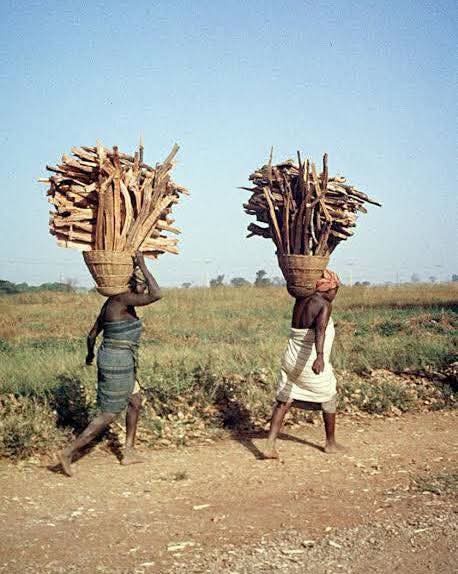
But before the convoys, government houses and giant buildings…
there were villages.
Before the Federal Capital Territory…
there were kingdoms and indigenous communities.
Before Aso Rock became a symbol of government…
it was simply part of the landscape and history of the people who lived there.
That is the part of Abuja’s story we sometimes forget.
A capital city can be created on a map in a few years.
But the history of the land beneath it can be centuries old.
So the next time you see Abuja on television, remember:
There was an Abuja before Abuja became Nigeria’s capital.
Do you know the history of the land where you live?