CHIEF ANTHONY UKPABI ASIKA THE MAN WHO RULED EAST CENTRAL STATE DURING THE CIVIL WAR
CHIEF ANTHONY UKPABI ASIKA THE MAN WHO RULED EAST CENTRAL STATE DURING THE CIVIL WAR
Come, let me take you back to one of the most complicated periods in Nigeria’s history, when the country was fighting a civil war and the former Eastern Region had been divided by war, politics and competing loyalties.
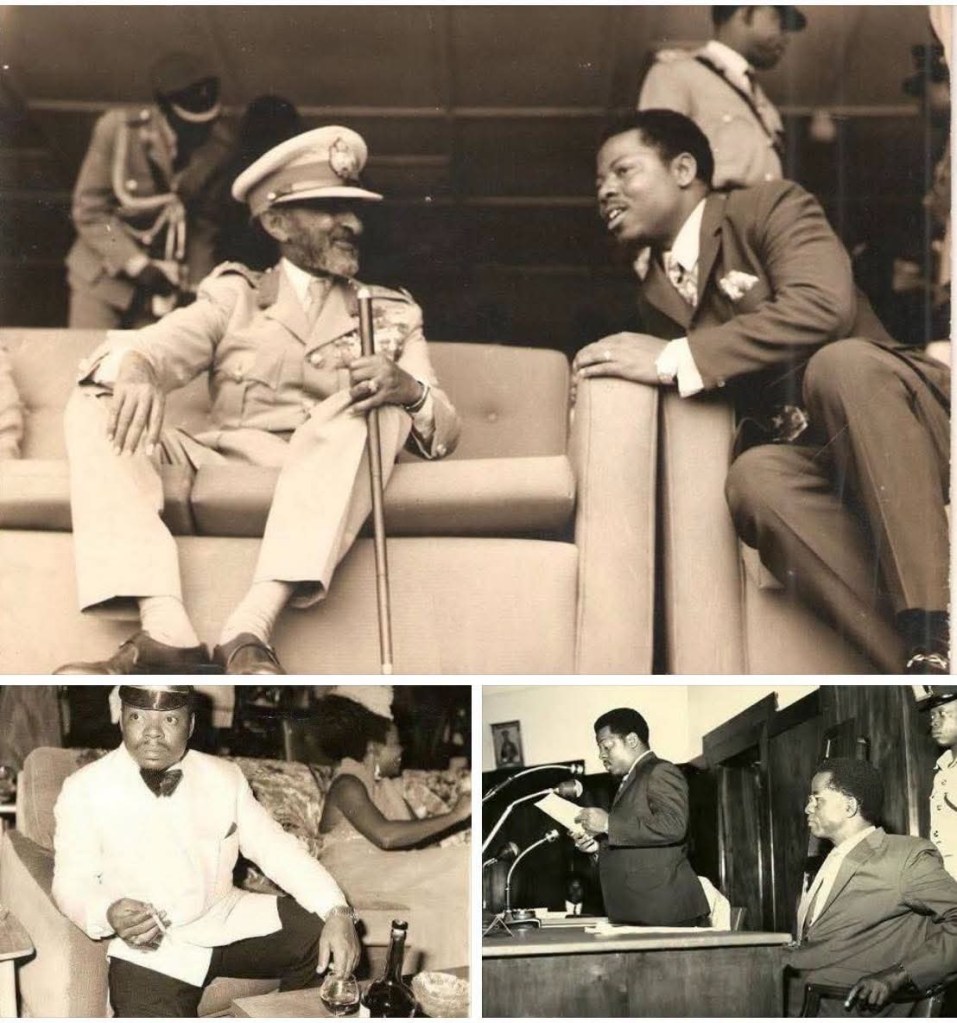
One of the most controversial figures of that period was Chief Anthony Ukpabi Asika, an Igbo man who became the Federal Government’s Administrator of East Central State during the Nigerian Civil War.
Asika was born in Onitsha on 28 June 1936.
He was educated at St. Patrick’s College, Calabar, and Edo College before proceeding to University College Ibadan and later the University of California, Berkeley, where he studied political science.
He returned to Nigeria and became a lecturer in Political Science at the University of Ibadan in 1965.
But the crisis that engulfed Nigeria in 1966 would completely change the direction of his life.
When Colonel Odumegwu Ojukwu declared the secession of the Eastern Region as the Republic of Biafra in May 1967, Asika took a position against the secession.
On 28 October 1967, after federal troops had captured Enugu, General Yakubu Gowon appointed Asika as the Administrator of the newly created East Central State.
He was only 31 years old.
For the next several years, Asika became one of the most important civilian figures representing the Federal Government in the former Eastern Region.
His position was extremely controversial.
To the Biafran side, he was an Igbo man who had chosen to work with the Federal Government.
Biafran propaganda reportedly referred to him as “Lord Haw Haw,” portraying him as a traitor to the Biafran cause.
But Asika saw himself differently.
He maintained that Nigeria should remain one country and that his decision was based on his belief in a united Nigeria rather than loyalty to a particular political or ethnic cause.
During the war, he administered the areas of the former Eastern Region that came under federal control.
After Biafra surrendered in January 1970, his role became even more important as the Federal Government attempted to restore administration and normal life across the devastated region.
His story is therefore one that cannot easily be placed into a simple box of hero or villain.
He was an Igbo intellectual who stood on the Federal side during a war in which many of his fellow Igbo people supported Biafra.
After the war, Asika remained active in Nigerian public life.
In 1985, he led a Nigerian presidential delegation to Niger, Chad and Cameroon in an effort to discuss the reopening of Nigeria’s borders and strengthening relations with its neighbours.
In 1996, Asika suffered a stroke.
He lived with the effects of the illness for several years.
He died in Abuja on 14 September 2004, aged 68.
Today, Anthony Ukpabi Asika remains one of the most debated figures of the Nigerian Civil War era not simply because of the position he held, but because of the difficult choice he made at a time when Nigeria was literally tearing itself apart.
History is rarely black and white.
Sometimes, it is about people making choices in moments when every choice comes with a price.
 Hi welcome to my website