She Set the Plantation Ablaze to Save Her Four Children—Then Twelve Slave Hunters Followed Her Into the Forest… Not One Came Back
She Set the Plantation Ablaze to Save Her Four Children—Then Twelve Slave Hunters Followed Her Into the Forest… Not One Came Back
Long before people turned her name into a warning…
Before frightened men whispered about the forests of Escambray…
Before slave hunters began refusing to ride beneath those trees after dark…
There was only Juana.
A mother.
Four children.
And a decision that could not be undone.
Matanzas, Cuba.
Every morning began the same way.
Before daylight touched the sugar fields, the plantation was already awake.
Chains dragged across wet ground.
Whips split the darkness.
Exhausted men and women emerged from overcrowded barracks, their bodies bent from years of labor that never seemed to end.
Children followed them.
Some barely old enough to carry what they were given.
The sugarcane stretched toward the horizon in endless green rows.
From far away, it looked almost beautiful.
From inside those fields, it was a prison without walls.
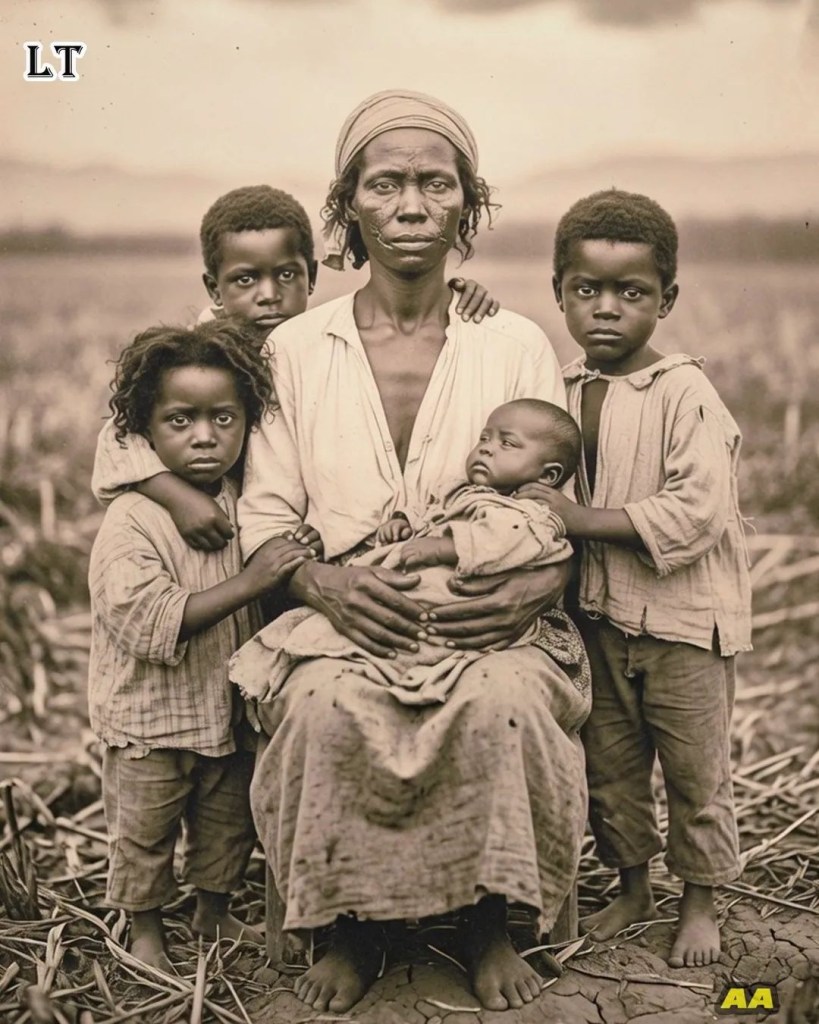
Among the hundreds forced to work there was a woman named Juana.
She was not physically imposing.
She did not challenge the overseers.
She did not shout.
She did not openly resist.
That made them believe she was harmless.
They were wrong.
While others kept their eyes lowered, Juana studied everything around her.
She knew which guards disappeared behind the storehouse to drink rum.
She knew which dogs became confused near running water.
She knew which paths wound north toward the hills.
She knew where the fencing weakened after storms.
She knew how the evening wind changed direction.
No paper map existed.
She did not need one.
The plantation had been carved into her mind.
Because for months, perhaps years, Juana had been preparing for one impossible thing.
Escape.
Not because she believed her own life could still become whole.
But because of four children.
Mateo was eight years old.
Old enough to understand what chains meant.
Old enough to know when an overseer approached.
Old enough to fear footsteps behind him.
Rosa was six.
She could still smile.
Especially when Juana sang the old songs her own mother had carried from another world before their family had been torn apart.
Tomás was only four.
And little Benjamín was young enough to fall asleep against Juana’s chest when the nights turned cool.
Those children were the center of everything that remained inside her.
After twelve hours cutting cane beneath the Caribbean sun, Juana returned each evening to the children’s quarters as quickly as exhaustion allowed.
Those few moments were the only part of the day that belonged to her.
She washed their bruises.
Wrapped strips of cloth around bleeding feet.
Broke pieces from the small portion of cornbread she had hidden instead of eating.
Then she gathered them close.
And sang.
Songs older than the plantation.
Older than the people who claimed ownership over them.
Songs carried across an ocean inside memories no whip had managed to destroy.
Her children never understood why their mother sometimes cried while singing.
Juana understood perfectly.
If she did nothing, Mateo would soon be sent into harder labor.
Tomás would follow him.
Rosa could be sold away.
Benjamín might grow up never remembering the sound of his siblings’ voices.
Eventually, the plantation would tear them apart one by one.
Then one afternoon, something happened that destroyed whatever patience Juana had left.
Mateo dropped a basket of freshly cut cane.
It struck the ground.
Nothing more.
A mistake made by a tired eight-year-old boy.
The new overseer heard it.
He turned slowly.
Then smiled.
Not because anything was amusing.
Because hurting people amused him.
“You useless little animal.”
The whip came down.
Mateo screamed.
A second strike followed.
Then another.
And another.
Juana stopped breathing.
Every blow landing on her son seemed to tear through her own body.
She ran toward him.
“Please!”
She begged the overseer to stop.
He did not.
She tried to place herself between Mateo and the whip.
The overseer threw her aside.
“The boy learns today,” he said, laughing.
By the time the sun began to fall, Mateo could barely walk.
That night, Juana sat beside him with a cracked wooden bowl filled with collected rainwater.
Slowly, she washed blood from his back.
Mateo tried to reassure her.
“I’m alright, Mama.”
Juana stared at him.
She knew he was not.
He knew she knew.
But neither said anything more.
Because while her hands cleaned his wounds, something inside Juana had finally become certain.
Her children would not grow up beneath the whip.
Not if she could prevent it.
Not another day.
That night, when the plantation had gone quiet, Juana rose from the floor.
She moved carefully through the sleeping quarters.
Outside, rain had begun falling.
At first lightly.
Then harder.
Juana looked upward.
Rain was good.
Rain softened footprints.
Rain swallowed small noises.
Rain confused dogs.
And rain gave darkness another layer.
She slipped toward the communal kitchen.
The cooking fires had nearly died, but hot embers still glowed beneath the ash.
Juana crouched beside them.
Her fingers closed around a charred branch still burning at one end.
For several seconds, she simply held it.
Then she looked across the plantation.
The barracks.
The storage buildings.
The machinery.
The great house beyond them.
Years of labor.
Years of pain.
Years of families being broken.
Years of children growing up believing survival was the closest thing they would ever know to freedom.
Juana whispered four words.
“No more.”
Then she touched the burning wood to the side of the dry building.
At first the flame flickered weakly.
Then the wind caught it.
Fire raced upward.
Across one board.
Then another.
Within moments, flames tore through the structure.
The blaze jumped to the next building.
Then another.
Suddenly the night exploded.
People shouted.
Dogs barked.
Guards ran through the rain.
Workers poured from the barracks.
Smoke covered the stars.
No one understood what was happening.
The plantation’s carefully controlled world had become chaos.
Juana was already moving.
She rushed back toward her children.
“Wake up.”
Her voice was low.
Steady.
“There’s no time.”
She secured Benjamín against her back.
Rosa grabbed her hand.
Mateo struggled upright despite the wounds across his body.
Tomás wrapped both arms around Juana’s dress.
Then they ran.
They disappeared between rows of burning sugarcane while guards raced toward the flames behind them.
Juana never turned around.
Not once.
The fire climbed higher.
Wooden buildings collapsed.
Orange light turned the night sky red.
Everything the plantation owner believed permanent was burning.
Ahead of Juana and her children waited nothing but black wilderness.
Forest.
Mountain trails.
Rain.
Hunger.
Snakes.
Wild animals.
And men who would soon come looking for them.
Still, Juana chose the forest.
By morning, almost nothing remained of the plantation’s orderly center.
The owner stood among smoking ruins.
His wealth had turned to ash before sunrise.
And his rage had focused on a single name.
Juana.
“This woman has humiliated me.”
He entered what remained of his office and threw a thick leather pouch onto a table.
The bag burst open.
Gold coins rolled across the wood.
Men standing around him stared at the money.
“Twelve hunters.”
He looked at them one at a time.
“The best.”
Then his voice hardened.
“I don’t care whether she returns breathing.”
“I don’t care whether she returns dead.”
“Bring me Juana.”
Twelve men accepted.
They were not amateurs.
These were hardened slave hunters who had spent years tracking people through swamps, forests, rivers, and mountains.
They knew how to read footprints.
Broken branches.
Discarded cloth.
Ashes from small fires.
They knew how terrified people moved.
How hunger slowed them.
How children left signs adults could not hide.
None of the twelve had ever considered a woman with four children a serious threat.
None expected this hunt to be different.
They saddled their horses.
Loaded their weapons.
Unleashed their dogs.
And rode toward the forest.
They believed Juana was running from them.
They had no idea they were following her into the last hunt of their lives.
Deep beneath the canopy, Juana sat with her children hidden between enormous roots.
Benjamín slept against her.
Tomás curled beside Rosa.
Mateo fought the pain in his back without complaining.
Around them, the forest seemed endless.
For the first time since Juana could remember, she heard no chains.
No overseer shouting.
No whip.
Only insects.
Water dripping from leaves.
Wind moving through branches.
Freedom did not yet have a house.
It did not have food.
It did not promise safety.
But for one morning…
They had it.
Then somewhere far behind them…
A dog barked.
Juana opened her eyes.
Another bark answered.
Closer.
Mateo looked toward his mother.
“They found us?”
Juana slowly rose.
Fear was there.
Of course it was.
But something else had appeared beside it.
Resolve.
Twelve men were entering the forest.
Twelve men who had made a living hunting human beings.
Twelve men convinced that a mother traveling with four children would be easy to capture.
The forest would soon teach them otherwise.
Because the most dangerous thing waiting beneath those Cuban trees was not a jaguar.
Not a snake.
Not darkness.
It was a mother who had already burned one world to save her children…
And had nothing left to lose.
The hunters have finally found Juana’s trail.
But following it will lead them somewhere none of them are prepared to enter.
 Hi welcome to my website