How Ojukwu Protected the Northern Political Establishment from the January 1966 Coup
How Ojukwu Protected the Northern Political Establishment from the January 1966 Coup
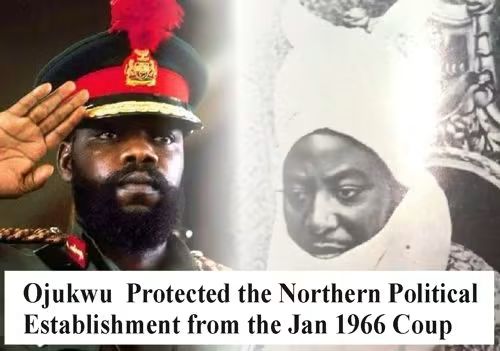
At 8.30 on the morning of 15 January the whole Fifth Battalion under the command of Lt. Col Emeka Ojukwu was on parade inside Kano Stadium when a motor cycle despatch rider came into the stadium, and presented him with a message from Kaduna, that “there has been an Army coup d’etat. The country is now under new control. The Sardauna of Sokoto is dead. Your orders are to arrest and detain all parliamentarians and politicians”.
Ojukwu quietly ended the parade, took his men to barracks and disarmed them. He made a call to Gen. Ironsi the Chief of Army to understand what was going on. Ironsi confirmed to him there had been an attempt at a coup, that things in Lagos were still confused. Ojukwu urged him to issue a general order confining all soldiers to the barracks and gave him the unqualified loyalty of the Fifth Battalion and Kano area.
Later Nzeogwu called him and demanded that Kano battalion join the coup, but Ojukwu refused. Nzeogwu told him that armed men and armoured cars were on the road to Kano to force obedience. Emeka replied that if he did, the Fifth Battalion would repel them. The fighting force from Kaduna was never sent. Nzeogwu needed Kano because of its great commercial benefit and international airport, and he knew Emeka knew he needed it, but was determined he should not have it.
Later, Ojukwu went to Emir, Alhaji Ado Bayero. to coffer with him, but Emir who was still confused about the whole situation asked Ojukwu to take him back to the barracks for better protection. So Emeka brought him back. That evening, almost all the whole Northern political Establishment came back from Lagos and landed in Kano. Ojukwu welcomed them at the Kano airport. He read out the messages from Nzeogwu, but offered them his protection.
With Ironsi in complete charge of the south and Ojukwu in charge of half of the north, the coup collapsed. It is ironic that the Igbos were later blamed for that coup.

