THE DREAM THAT REFUSED TO DIE
THE DREAM THAT REFUSED TO DIE
In 1963, when 32 independent African nations gathered in Addis Ababa, Ethiopia, to establish the Organisation of African Unity, the message was bigger than a diplomatic meeting. Africa was declaring that the struggle for freedom could not end with national flags being raised. The continent also needed solidarity, cooperation, and control over its future.
But one of the strongest voices calling for deeper unity was Ghana’s first president, Dr. Kwame Nkrumah.
Nkrumah believed that political independence would remain incomplete if African nations stood separately in a world dominated by powerful economic blocs. He advocated a United States of Africa, arguing that a divided continent would struggle to defend its collective interests.
Then came other generations of leaders, each leaving a different lesson.
- Patrice Lumumba became a symbol of the struggle for Congolese independence and the right of Africans to determine their own destiny.
- Thomas Sankara challenged dependency and promoted self-reliance, domestic production, and national dignity in Burkina Faso.
- Marcus Garvey inspired generations through Black unity, economic independence, and pride in African identity.
- Nelson Mandela became a global symbol of resistance to apartheid and the pursuit of a democratic South Africa.
- Julius Nyerere championed African solidarity and worked to strengthen cooperation among African nations.
- Muammar Gaddafi invested political resources in the project of continental integration and pressed for a much more powerful African Union. His ambitions were controversial, and his political legacy cannot be separated from authoritarian rule and serious abuses.
These men were not identical. They disagreed about leadership, economics, political systems, and the meaning of unity. Some achieved historic victories; others left complicated legacies.
But their stories leave us with a question that remains urgent:
Why is the dream of African strength still unfinished after so many generations of struggle?
THE GADDAFI QUESTION: WHAT DID AFRICA LOSE, AND WHAT MUST WE LEARN?
When Muammar Gaddafi was killed in 2011, Africa lost one of the most prominent advocates of a politically unified continent. His death did not end the African Union, and it would be inaccurate to claim that Africa’s difficulties began with his death or that one man could have solved them all.
Nevertheless, the collapse of his political project raised a serious question: could African unity depend on the wealth, influence, or ambitions of individual leaders, rather than strong institutions that survive them?
That is a lesson Africa must take seriously.
A continent cannot build its future around one powerful president, one revolutionary, one billionaire, or one charismatic voice. Leaders may rise and fall. Governments may change. Political alliances may collapse.
But the institutions that protect African interests must remain standing.
Africa needs transparent institutions, accountable leadership, strong industries, reliable infrastructure, scientific innovation, and regional cooperation that can survive political transitions.
We should study the achievements of our historical figures without turning them into flawless heroes. We must also examine their mistakes honestly, because a generation that refuses to learn from history risks repeating it.
THE LEGITIMATE NEWS: AFRICAN UNITY IS NOT DEAD
AfCFTA’s $3 Trillion Market: Fact vs Reality | Ignite Africa posted on the topic
McGyan & Sons Company LTD – Premier HR Staffing Solutions in Ghana
Here is an important development that deserves attention: the dream of African integration is still being pursued through concrete continental initiatives.
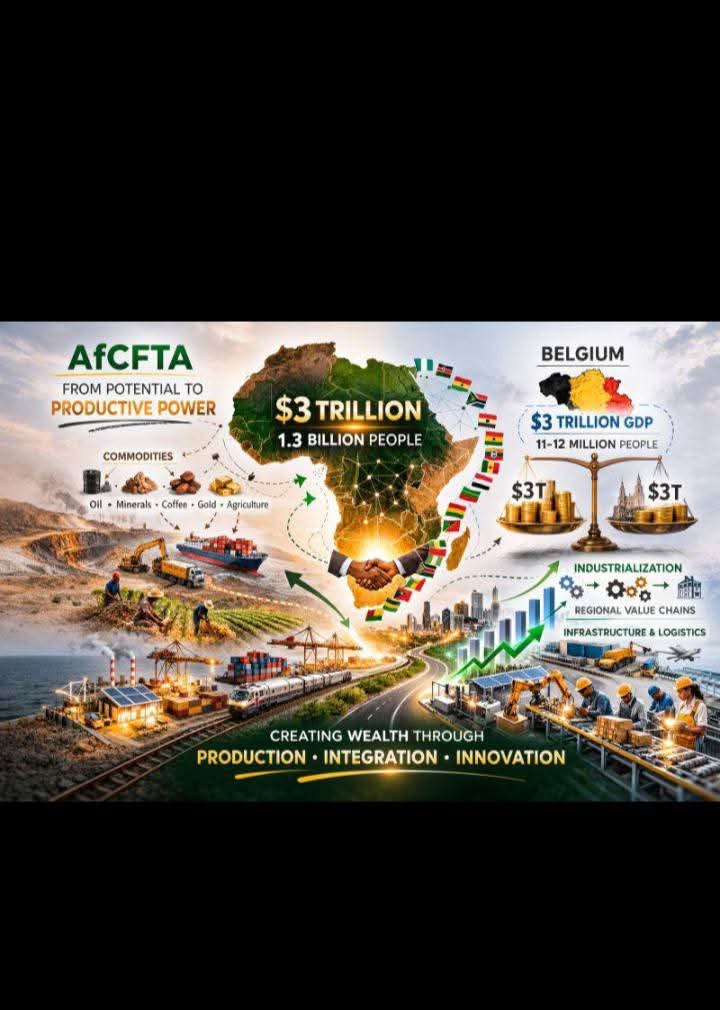
The African Union, launched in 2002, continues the institutional work of the Organisation of African Unity. One of its major economic initiatives is the African Continental Free Trade Area (AfCFTA), designed to create a single African market for goods and services.
In July 2025, Reuters reported that implementation was still uneven: although the agreement had been ratified by many countries, fewer than half were actively trading under it at that time. The report also highlighted the need for better transport infrastructure, fewer border delays, and stronger industrial capacity.
Think about what this means.
Africa is home to more than 50 countries, each with its own resources, people, skills, and economic opportunities. Yet businesses can still face obstacles when trying to sell products across African borders.
A manufacturer in Nigeria should be able to find customers in Ghana, Kenya, Senegal, Rwanda, and beyond without unnecessary barriers making regional trade more difficult.
A farmer should be able to reach more markets. A young African engineer should be able to collaborate with manufacturers across the continent. An African entrepreneur should have opportunities to build a business that grows beyond one national market.
That is what unity must begin to mean in practical terms.
Not merely speeches at summits.
Not merely photographs of presidents holding hands.
Unity must become jobs, factories, affordable transport, stronger businesses, better education, and wealth that remains in African communities.
SO, WHAT IS THE WAY FORWARD FOR AFRICA?
If we genuinely want to honour the people whose faces appear on this poster, we must turn historical admiration into practical action.
![BURN secures US$ 9.2 million investment through Key Car
- BUILD WHAT AFRICA CONSUMES
Africa must invest in local manufacturing, food processing, pharmaceuticals, machinery, textiles, and technology. Exporting raw materials while importing expensive finished products limits the value African economies retain. We must move from simply supplying the world’s raw materials to producing more of the finished goods our people need.
- MAKE AFRICAN TRADE EASIER
Governments must implement AfCFTA commitments, improve roads and railways, modernise ports, simplify customs procedures, and reduce unnecessary trade barriers. African unity becomes real when businesses can trade across borders efficiently and legally.
[FORMATIONS | Polytechnique Cameroun]
- INVEST IN AFRICAN KNOWLEDGE AND SKILLS
Our young people need practical education, technical training, research facilities, and opportunities to turn inventions into businesses. We must respect traditional craftsmanship while developing modern engineering, science, and digital technology.
- SUPPORT OUR OWN PRODUCERS
Governments, businesses, and consumers should help competitive African-owned enterprises grow. Buy locally made products when quality and price meet your needs. Support farmers, artisans, inventors, and small manufacturers who can become the foundation of larger African industries.

