THE ANCIENT HISTORY OF NGWALAND .
THE ANCIENT HISTORY OF NGWALAND .
OKPUALA NGWA AND UMUOLIKE: WHERE THE ANCESTRAL STORY OF NGWA BEGINS: Before Abia State was created, before Aba became a great commercial city, and long before politicians began dividing our communities into local government areas, our ancestors had already established settlements, built families and developed their own institutions. One of the most important places in this history is Okpuala Ngwa.
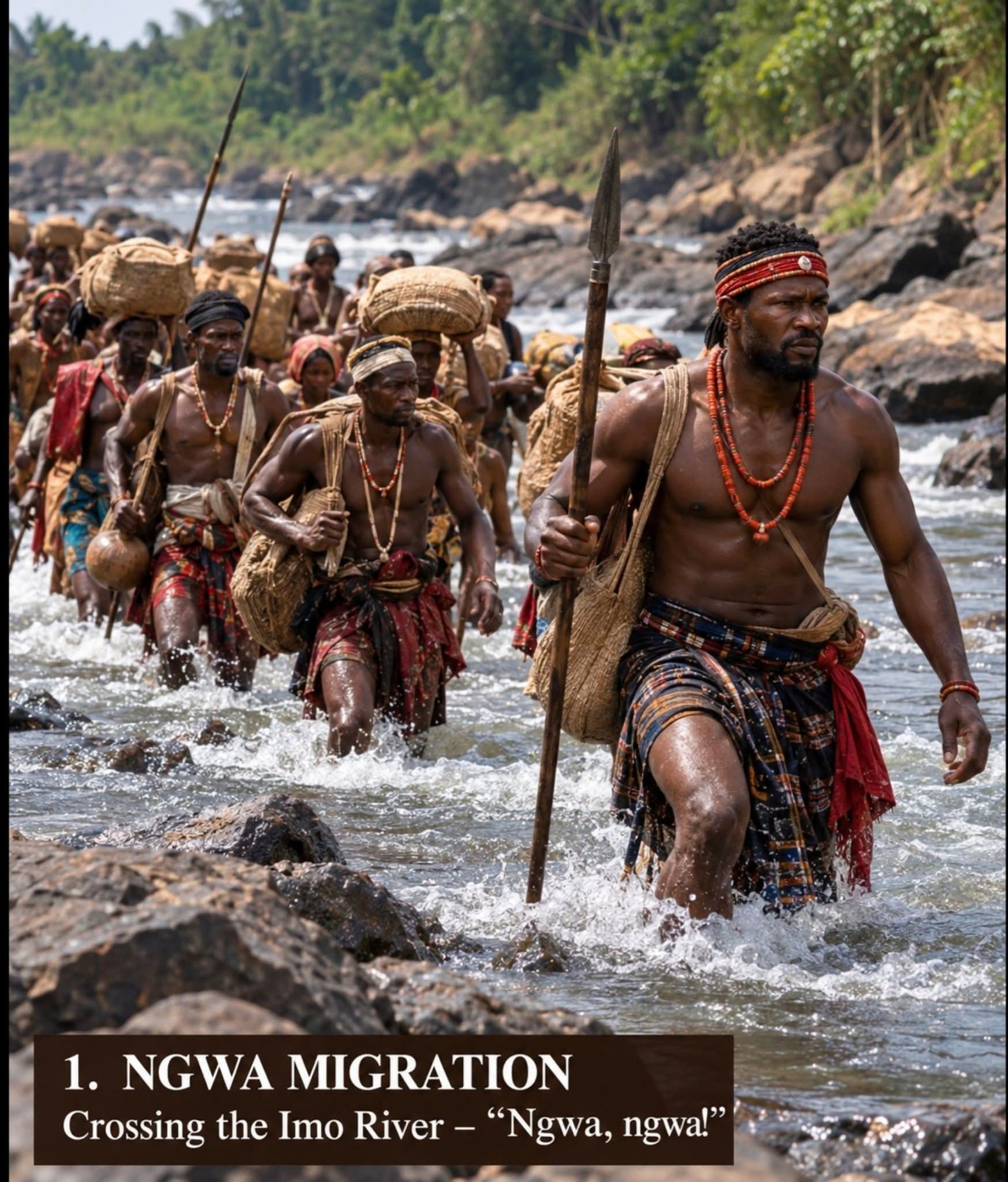
According to Ngwa ancestral traditions documented by historians, including Professor John Nwachimereze Oriji, the early Ngwa migration is associated with a crossing of the Imo River. One historical interpretation places this migration around the late 17th century, approximately 1675–1700 AD, although the exact year remains uncertain. Among the ancestral figures remembered in these accounts are Ngwa Ukwu, Nwoha and Avosi. The popular expression “Ngwa, ngwa!”, meaning “Quickly, quickly!”, is traditionally linked to this migration, although the precise origin of the name remains a subject of historical interpretation.
Now, there is something particularly important about Umuolike. Ngwa Ukwu, traditionally regarded as the eldest of the ancestral brothers, is remembered as having established his settlement there following the migration. Although the exact year of this settlement is unknown, accounts also associate the community with an ancestral shrine known as Ala Ngwa, which played an important role in the religious and communal life of the early settlers. The name Okpu Ala Ngwa is traditionally connected with this ancestral centre.
As the population increased, families moved into surrounding territories, established new compounds and cultivated farmlands. Over generations, these movements contributed to the development of other Ngwa communities.
This is why Okpuala Ngwa cannot be discussed merely as a local government headquarters. Its significance reaches into the ancestral history of our people. However, Ngwa history also includes other migrations and settlements, and we must be careful not to reduce the origins of every community to one account.
Umunnem ndi Ngwa, our forefathers left us more than land. They left us a history that deserves to be understood and preserved. Those from Umuolike and Okpuala Ngwa, what did your grandparents tell you about the early settlements?
Ala Ngwa bu ala nna anyi!

